

Outreach engagement
Cracking the Code. An Adventure in Writing (CodeAW)
Start guide
Imagine messages carved in stone 3,000 years ago. Imagine clay tablets recording royal secrets, sacred rituals, and everyday life. Imagine trying to decode writing systems that few people in the world can read, and discovering that we're still cracking the code today.
CodeAW is your gateway into the world of ancient Anatolian civilizations and their fascinating writing systems. We're not just showing you dusty old artifacts, we're inviting you to become code-breakers, exploring how the Hittites, Luwians, Lydians, and other ancient peoples communicated, recorded knowledge, and left messages across millennia.

Who are we?
CodeAW is part of the CAncAn project (Communication in Ancient Anatolia), an ERC-funded research project led by Professor Annick Payne. Our interdisciplinary team includes postdoctoral researchers Šárka Velhartická, Nathan Lovejoy, and Sveva Elti di Rodeano, and doctoral students Emanuele Alleva, Gabriele Biancalani, and Nicolò Bordoni – specialists in ancient languages, archaeology, linguistics, and cultural heritage.
We are passionate about making ancient Anatolian writing accessible, exciting, and relevant to everyone, whether you're a curious student, a teacher looking for engaging materials, or someone who simply loves history.
We believe that understanding how ancient people wrote and communicated teaches us something profound about human civilization: communication is power, connection, and memory.
Meet Sveva Elti di Rodeano: Why writing systems tell us more
Why study writing systems instead of just languages? Meet Sveva Elti di Rodeano, Postdoctoral Researcher on the CAncAn project, as she explains her journey from historical linguistics to the fascinating, layered world of ancient writing. Discover why understanding how people wrote, not just what they wrote, unlocks the real identities and experiences of ancient Anatolians.
Meet Emanuele Alleva: Beyond words, understanding lost languages
How many ancient languages can you actually ‘know’, and what does "knowing" an ancient language even mean? Meet Emanuele Alleva, Doctoral Student on the CAncAn project, as he explores what makes studying ancient Anatolian languages fundamentally different from modern languages. Discover why complex writing systems on ancient artifacts are irresistible puzzles, what the most common curse inscribed on tombstones actually says, and how curiosity drives him to decipher these lost voices.
Meet Nathan Lovejoy: From Excavations to Ancient Voices
You can't truly love history without loving the material evidence beneath your feet. Meet Nathan Lovejoy, postdoctoral researcher and archaeologist on the CAncAn project, as he explains why excavations and material evidence are essential to understanding the past. Discover his passion for ancient writing as puzzle-solving, piecing together what people actually said and meant thousands of years ago.
Meet Gabriele Biancalani: How Ancient Texts Reveal Ancient Minds
What do ancient texts tell us about how people actually saw the world? Meet Gabriele Biancalani, doctoral student on the CAncAn project, as he shares his journey into the history and archaeology of ancient Anatolia. Discover how reading ancient Hittite texts, the first ancient language he learned and still loves, offers unique windows into how people thought, lived, and shaped their world.
What will you find here?
This website is designed for you, whether you're completely new to ancient Anatolia or ready for deeper exploration.
Where to start?
- New to this topic? Begin with our main presentation to get oriented. Learn about the Hittite Empire, discover the two main writing systems (cuneiform and Anatolian hieroglyphics), and understand why ancient Anatolia matters today.
- Want hands-on activities right away? Jump to our interactive puzzles and writing challenges. Try deciphering a real Luwian hieroglyphic, or create your own bilingual inscription.
- Ready to dive deeper? Explore our teacher resources, research links, and "Going Deeper" section for more advanced topics and academic articles.
For students and learners
Ready to become a code-breaker? This section is designed for students and learners who want to dive into ancient Anatolian writing.
Explore interactive presentations that bring ancient writing to life, tackle hands-on activities where you'll decode hieroglyphics, create your own bilingual artefacts, and design writing systems. Test your knowledge with quizzes that challenge your thinking.
Whether you're in a classroom or exploring on your own, find materials that make ancient Anatolia come alive.
Student activities
The Cultures of Ancient Anatolia quiz

Teacher resources
Teach with confidence.
This section provides comprehensive support for educators bringing ancient Anatolian writing into the classroom. Access ready-to-use presentations and lesson plans with built-in discussion prompts and clear learning objectives, detailed teacher guides with timing recommendations, materials lists, and solutions to all activities, and background research to deepen your own understanding of this fascinating subject.
Whether you're new to ancient Anatolia or an experienced educator, find everything you need to make these lessons engaging, accessible, and effective for your students.
Background research
Teacher notes
See it in action
Theory is one thing – but does it actually work?
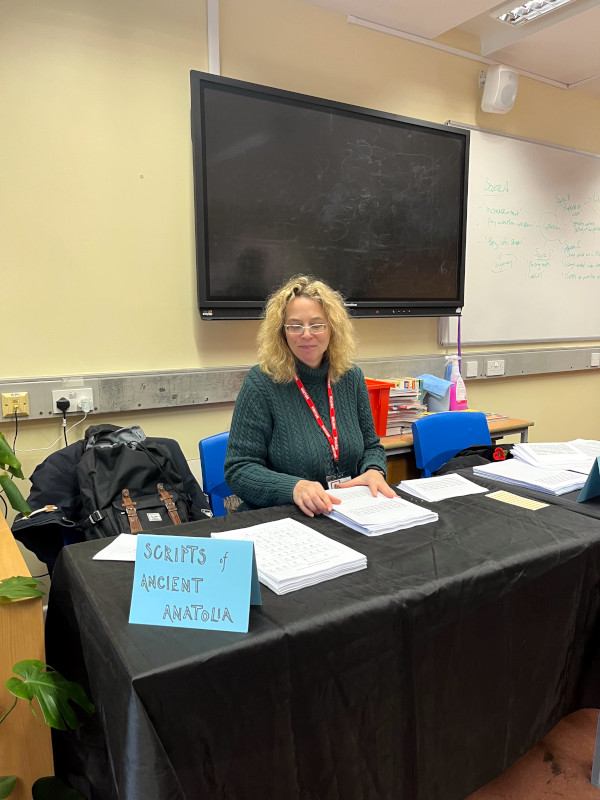
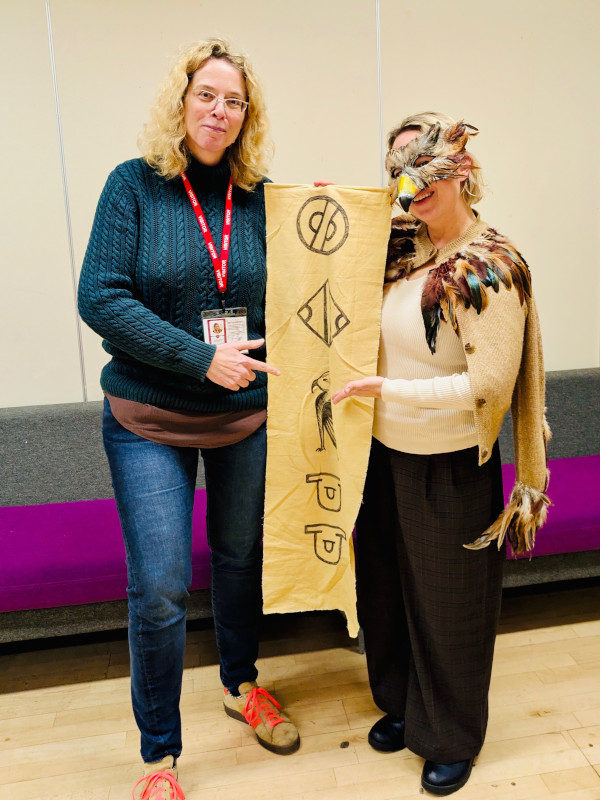
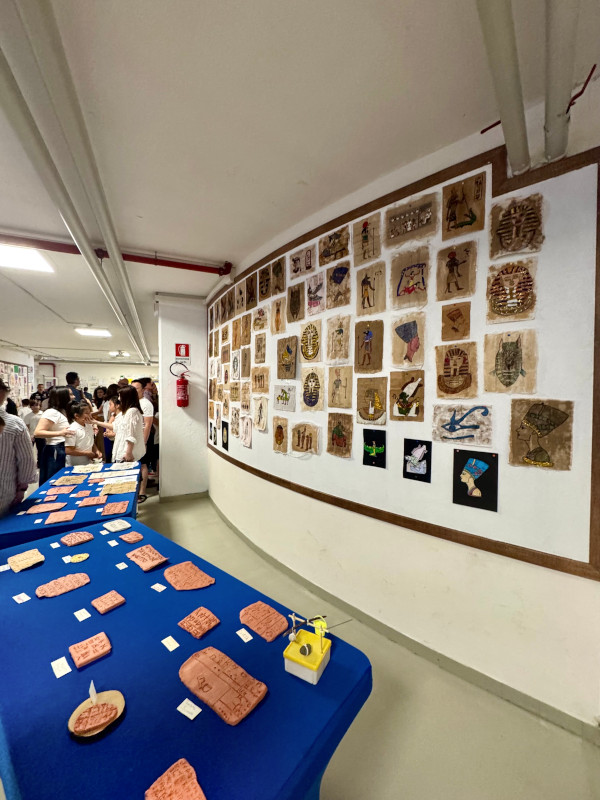
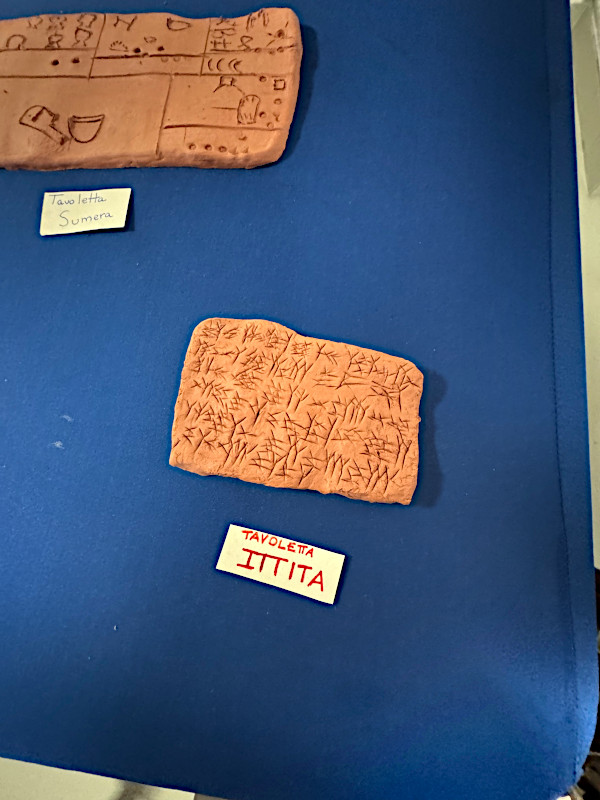
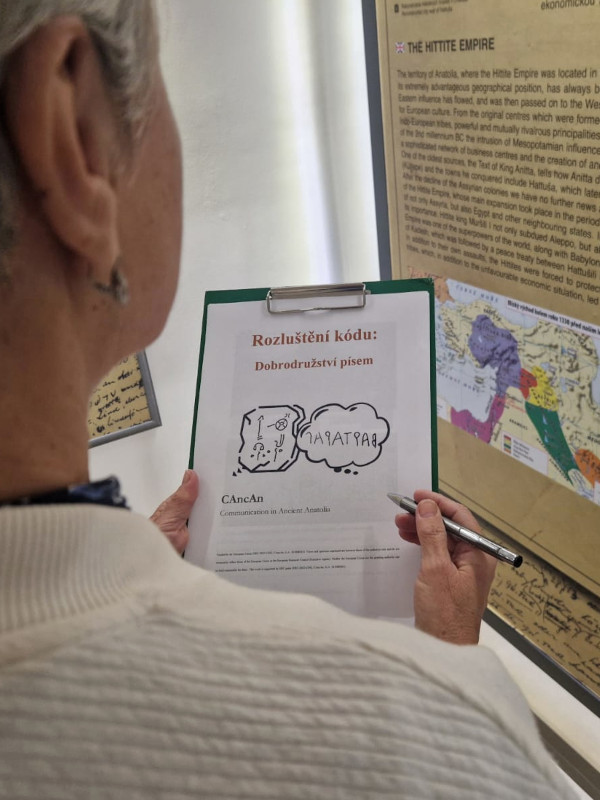
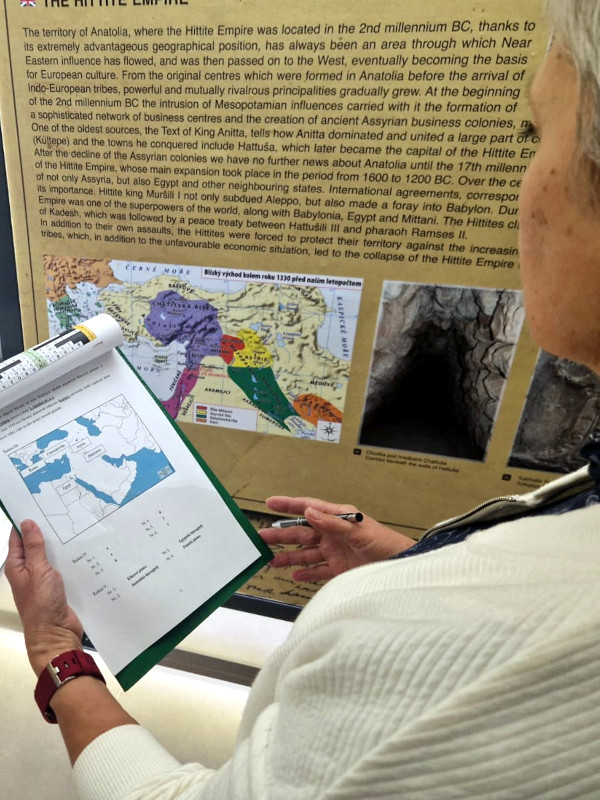
Hear from teachers who've used CodeAW activities in their classrooms, and watch students tackle hieroglyphic puzzles, create clay tablets, and discover the thrill of becoming code-breakers.
These authentic reflections show the real impact of our activities and might inspire you to try them in your own setting.
Interviews with
Antonio - Highlands Institute, Rome
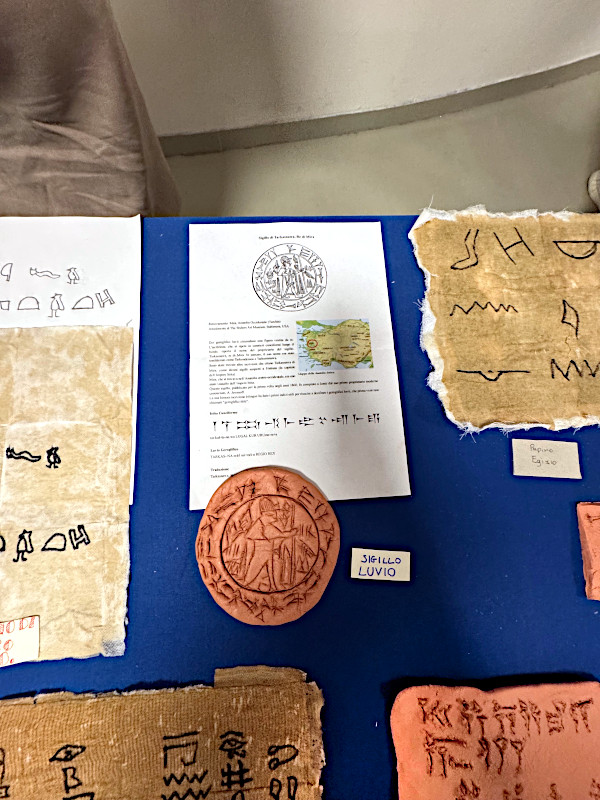
Seals were powerful tools in the ancient world, used to authenticate documents, mark ownership, and display authority. Meet Antonio, a 9-year-old student, as he explores a remarkable artifact: a seal bearing both Hittite cuneiform and Luwian hieroglyphic writing. Discover what this dual-script object reveals about communication, cultural contact, and identity in ancient Anatolia.
Federico, Highlands Institute, Rome
Creating your own ancient writing artifact is a powerful way to understand how scribes worked and what messages mattered to them. Meet Federico, a 9-year-old student, as he shares the two papyri he created using Egyptian hieroglyphs. Discover what inspired his designs, what he gained from his schoolwork, and how making ancient writing brought history to life for him.
Going deeper
Hungry for more?
This section curates the best resources across the web – documentaries, podcasts, academic articles, career profiles, and citizen science projects – to fuel your curiosity about ancient Anatolia and beyond.
Whether you're a student exploring further or a teacher seeking enrichment materials, find carefully selected links to deepen your knowledge and keep discovering.
General Introductions
- Collins, Billie Jean. “The Hittites and Their World”. 2007.
- Pecchioli Daddi, Franca. “Gli Ittiti”. 2013.
- De Martino, Stefano. “Gli Ittiti”. 2003.
- Klinger, Jörg. “Die Hethiter”. 2025.
- Melchert, Craig. “The Luwians”. 2003.
- Van de Mieroop, Marc. “A History of the Ancient Near East”. 4th edition. 2024.
- Liverani, Mario. “The Ancient Near East: History, Society, and Economy”. 2011.
- Shehata, Dahlia. “Babylonier, Hethiter und Co. für Dummies”. 2015.
History and Society
- Bryce, Trevor. “The Kingdom of the Hittites”. 2005.
- Bryce, Trevor. “Life and Society in the Hittite World”. 2002.
- De Martino, Stefano. “Anatolia: Terre di confine nel mondo antico”. 2021.
- Cline, Eric H. “1177 B.C.: The Year Civilization Collapsed”. 2014.
- Cline, Eric H., and Glynnis Fawkes. “1177 B.C.: A Graphic History”. 2022.
- Cline, Eric H. “After 1177 B.C.: The Survival of Civilizations”. 2024.
- Mora, Clelia, and Massimiliano Marazzi. “L'Anatolia antica”. 2007.
Literature, Mythology, and Religion
- Pecchioli Daddi, Franca, and Anna Maria Polvani. “La mitologia ittita”. 1990.
- Hoffner, Harry A. “Hittite Myths”. 1998.
- Archi, Alfonso. “Anatolia antica: Divinità, testi e rituali ittiti”. 2013.
- Vigo, Matteo. “Temi e motivi della letteratura ittita”. 2010.
- Francia, Rita, and Matteo Vigo. “Letteratura dell'Anatolia ittita”. 2024.
- Hutter, Manfred. “Religionsgeschichte Anatoliens”. 2021.
- Glassner, Jean-Jacques. “Écrire à Sumer: L'invention du cunéiforme”. 2000.
- “The Hittites. The Forgotten Empire”, documentary, narrated by Jeremy Irons (English)
- Petra Goedegebuure, “Luwian Hieroglyphs: An Indigenous Anatolian Syllabic Script” (English)
- Lecture series organized by Andréas Stauder (EPHE-PSL), “Graphic systems and writing in ancient civilizations” (French, English)
- Annick Payne, “The Anatolian Hieroglyphic Script” (English)
- Mirko Novák, “Luwians, Arameans and the so-called Neo-Hittite Culture” (English)
- Willemijn Waal, “Relations Between Script, Writing Material and Layout: the case of the Anatolian Hieroglyphs” (English)
- YouTube channel of the The Institute for the Study of Ancient Cultures, Chicago (English)
- YouTube channel on the Ancient World; videos and podcasts (English)
- Hittite Monuments - Comprehensive photographic
database documenting Neo-Hittite monuments, inscriptions, and sculptures across ancient Anatolia and Syria (English and Turkish) - Phrygian Monuments - Comprehensive
photographic database documenting Phrygian monuments and inscriptions across ancient Anatolia (English and Turkish) - HethPort Würzburg - Texts, glossaries, and pedagogical materials for Hittite language (English and German)
Feedbacks and questions
We'd love to hear from you.
Have you used CodeAW in your classroom? Discovered something fascinating? Have a question or suggestion?
Reach out to us at code-aw@unive.it – we read every message and look forward to connecting with you.
Unless otherwise stated, the contents of CAncAN website are licensed under a Creative Commons Attribution-ShareAlike 4.0 International License (CC BY-SA 4.0).