
Site 6: Takht-i-Bahi and Butkara I
Site 6a: Takht-i-Bahi
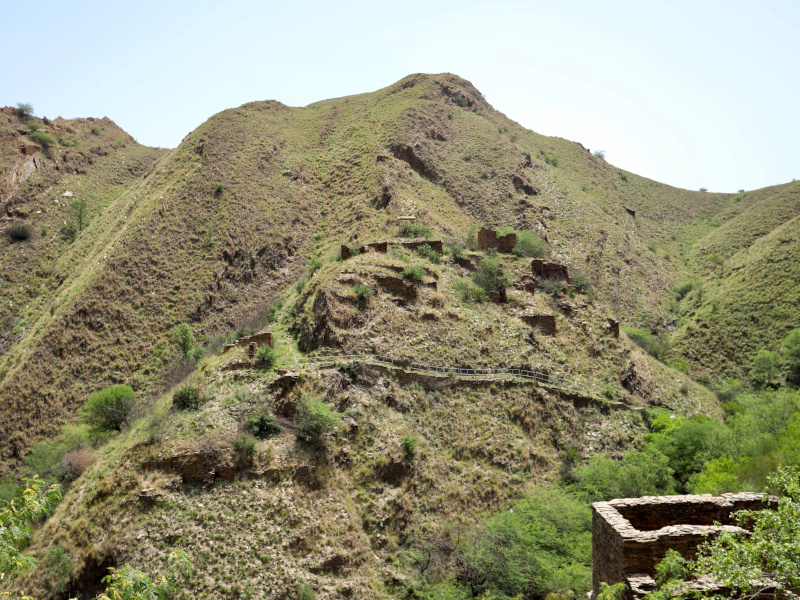
Takht-i-Bahi (c. 1st-5th centuries AD) is a complex Buddhist monastic site located in the Mardan district. The site, which is exceptionally well-preserved, was inscribed on the UNESCO World Heritage List in 1980 along with the fortified city of Sahr-i-Bahlol, located about 5 km from the monastic complex. The complex stretches along the crest of a low mountain range, covering an area of approximately 33 hectares, and includes a large monastery, courtyards with stupas and chapels, meditation cells, individual dwellings, and other structures. Numerous Buddhist sculptures and reliefs have been recovered from the site; most are now housed in the Peshawar Museum. Following an initial cleanup of the site in 1874, the first excavations were conducted by the Archaeological Survey of India (ASI) between 1907 and 1912. Between 2002 and 2005 and in 2012, excavation campaigns were carried out by the Department of Archaeology and Museums, Government of Pakistan. Recently, the provincial government of Khyber Pakhtunkhwa designated the entire mountainous area of the site (445 hectares) as an “Archaeological Reserve,” thereby protecting it from the area’s rapid urbanization.
Beginning in the 1920s, various conservation and restoration efforts were carried out at the site, first by the ASI and later by the federal and provincial DGOAM.
Today, Takht-i Bahi is the most visited archaeological site in the province of Khyber Pakhtunkhwa.
The activities planned as part of the Khyber PATH project will focus on Sector D, located in the eastern portion of the archaeological site. The area of interest is characterized by a series of isolated structures, some of which are preserved to a height of more than 2 meters.
The training and capacity-building activities planned at Site 6A will aim to:
- restore, secure, and improve accessibility to Sector D through interventions designed to ensure the safety of the walkway and the staircase leading to the sector, as well as through the controlled removal of invasive vegetation and the cleaning of the area, in order to enhance the site’s visibility and usability;
- specialized training in the field of conservation and restoration, to be carried out through demonstration projects on a selected number of buildings and structures.
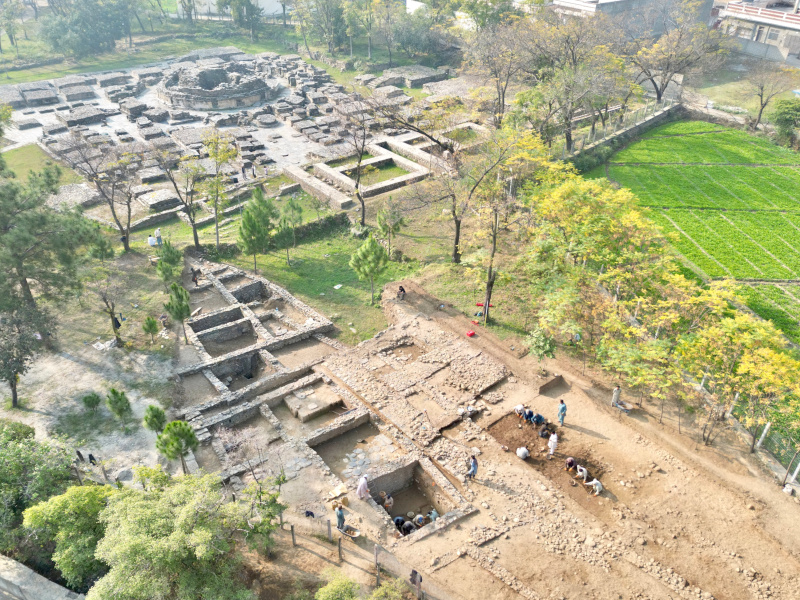
Site 6b: Butkara I
Butkara I (second half of the 3rd century B.C.-10th century A.D.) is the oldest and most important peri-urban sanctuary of the ancient capital of Swat, Massaga/Mengjeli, now known as Mingora. The city, besieged and conquered by Alexander the Great in 327 B.C., as recounted by Arrian and Curtius Rufus, maintained a role of primary importance in the region in the centuries that followed. During the Mauryan period, in the second half of the 3rd century BCE, a Buddhist complex centered on an Indian-style stupa — referred to (in two inscriptions) as dharmarajika — was founded on the southeastern outskirts of the settlement; it is known today as Butkara I. In the centuries that followed, the sanctuary underwent gradual development, expanding and being enriched with architectural structures and a significant collection of sculptures, eventually becoming one of the region’s principal centers of Buddhist pilgrimage.
The sanctuary’s significance is also documented by the accounts of Chinese and Tibetan pilgrims who visited the Swat Valley between the 5th and 13th centuries CE. The hundreds of sculptures unearthed during the excavations conducted by the Italian Mission between 1956 and 1962 — now preserved and on display at the Swat Museum — constitute some of the most significant and celebrated examples of Gandharan art.
Given the exceptional historical, archaeological, and religious significance of Butkara I, its established role in the current religious and tourist itineraries of the Swat Valley, and its topographical alignment with the Khyber PATH route, the site (temporarily designated Site 6B) was included in the project during its first year of operations.
This inclusion addresses the urgent need to intervene on a heritage site that is particularly vulnerable to the effects of the elements and, in particular, to the increasingly frequent floods and episodes of heavy rainfall affecting the region.
Training and capacity-building activities will be organized along three main lines of action:
- archaeological excavation, with particular focus on the area immediately north of the sanctuary
- consolidation and conservation, through interventions on structures and sculptures in situ damaged by exposure to the elements, as well as through the construction of a protective structure, based on the model designed for site 1, to ensure greater protection of the most delicate archaeological structures.
- improving the site’s accessibility and visitor experience through the installation of informational panels along the visitor route and interpretive displays designed to facilitate the interpretation and understanding of the archaeological remains, thereby highlighting the site’s historical and cultural significance.