
Site 1: Barikot
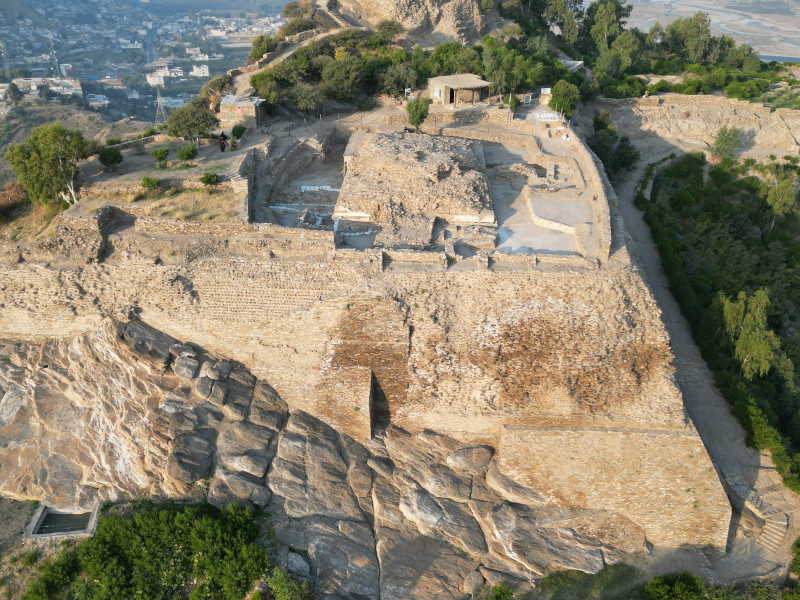
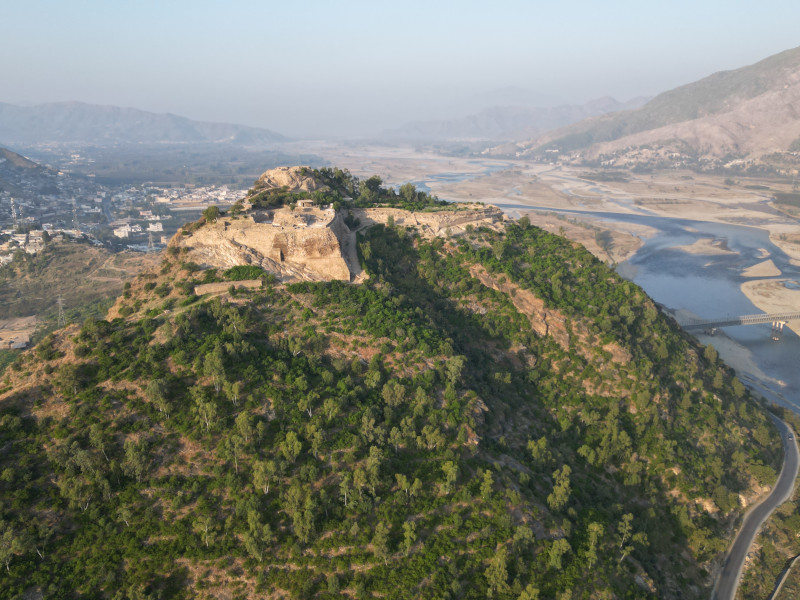
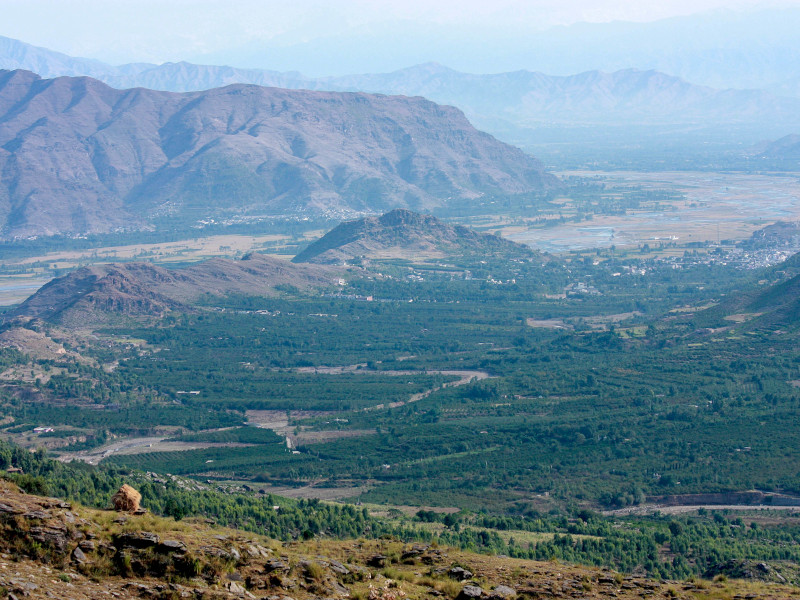
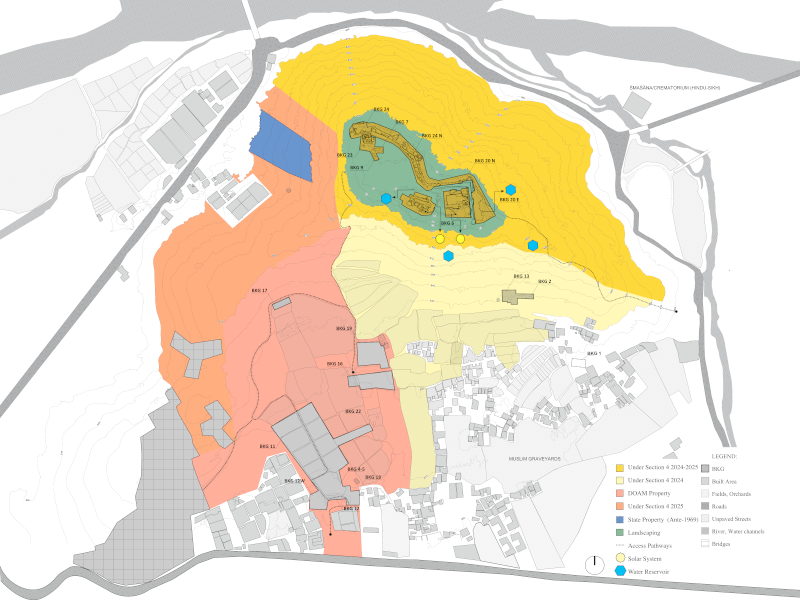
The site is located at 34°40′40″N, 72°13′24″E, at an average altitude of 830.00 meters above sea level. The spatial context of Barikot (Bir-kot-ghwandhai or BKG) is characterized by the acropolis hill overlooking the Swat River on the north side (938.00 m). The hill profile features a heavily eroded, vertical calcareous schist escarpment to the south (the slope overlooking the plain of the ancient lower city). The northern slope presents a profile with a steep incline towards the Swat River, characterized by a 45° slope of garnet mica schist rocks.
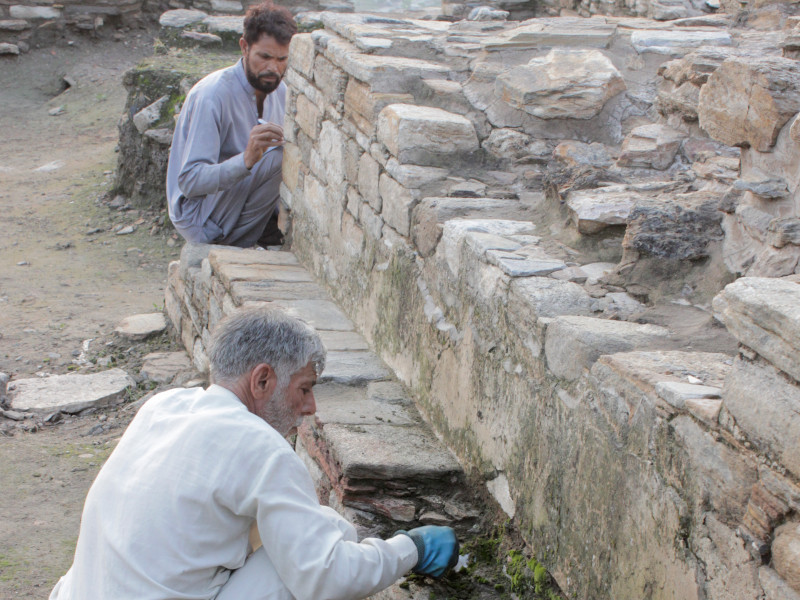
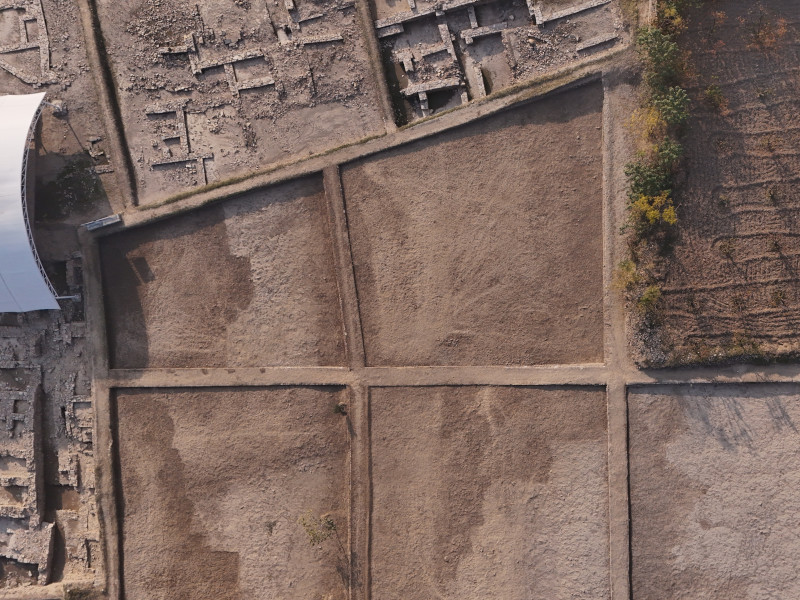
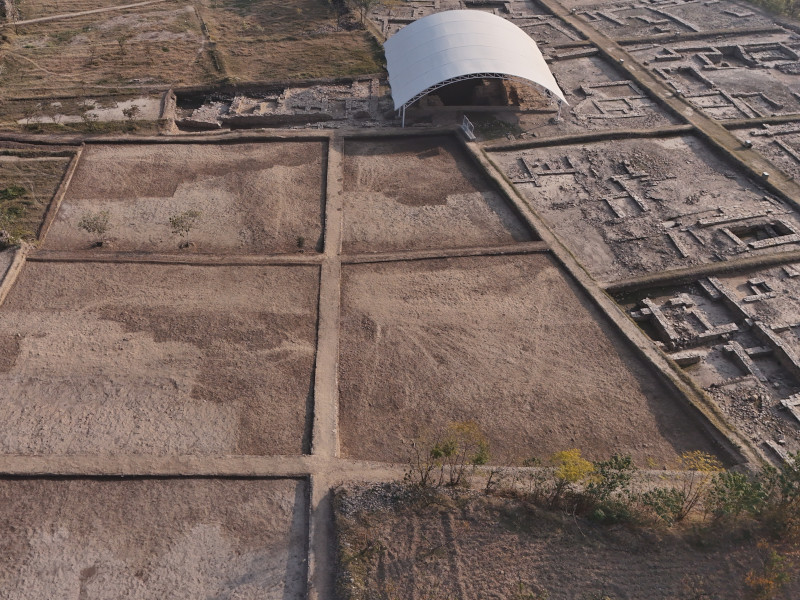
The occupation of the site spans 10 cultural macro-phases from 1200 BCE to the pre-modern period. The excavation of the site (15 hectares) focuses on the acropolis and the lower city. Twenty-five trenches or excavation areas have been opened (BKG 1-BKG 25). The site dates provided below are defined on the basis of C14 measurements and archaeological contexts.
For more information: Luca Maria Olivieri, “A new revised chronology and cultural sequence of the Swat valley, Khyber Pakhtunkhwa (Pakistan) in the light of current excavations at Barikot (Bir-kot-ghwandai)".
Macro-phases
This macro-phase corresponds to the period dated 1200-900 BCE. These layers have been identified in all excavation sectors. Overall, the available information outlines the existence in Macro-phase 1 of a large settlement which, including the acropolis, was larger than the future historical city, spanning 15-20 hectares, surrounding an inner stronghold, probably 5-7 meters wide, connected to the acropolis. Outside the settlement, there was a vast contemporary cemetery of at least 15 hectares.
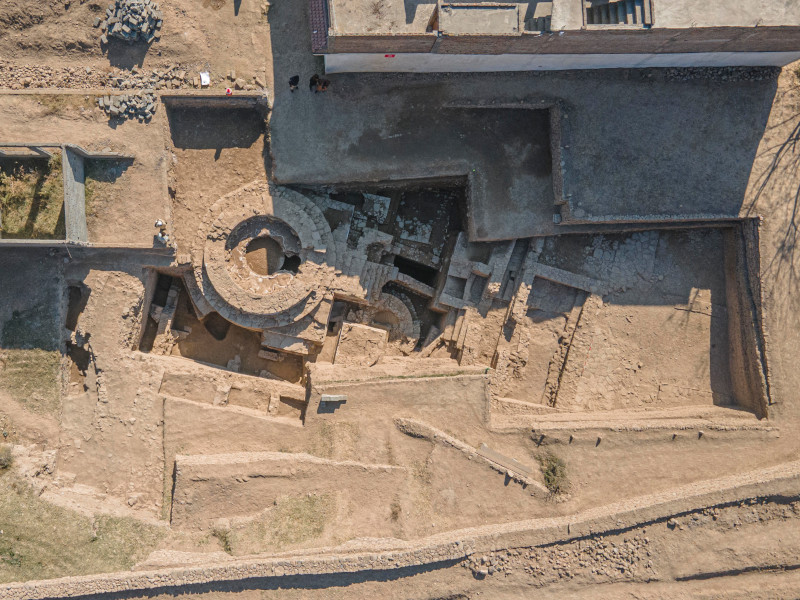
Initially revealed only in the 1985 excavations, it is now extensively documented. Macro-phase 2 corresponds to a chronological horizon that coincides with the early urban phases, with materials associated with the Achaemenid and Maurya cultural phases (i.e., from the 5th to the 3rd century BCE). It also includes the Apsidal Temple (Temple H) with its annexed stupa, recently discovered and excavated in trench BKG 16. For more information: “Barikot, Swat: Excavation Campaign 2021-2022, Preliminary Report. Trenches BKG 16, BKG 17, and BKG 18".
This macro-phase is also associated with the construction and maintenance of the defensive walls of the historical city, dated between the 2nd century BCE (mature Indo-Greek phase = construction of the defensive walls; conventional date = approx. 150 BCE). Macro-phase 3b (mid-1st century BCE - mid-1st century CE) saw the reconstruction of the Apsidal Temple H in Trench BKG 16 and its transformation into a circular sanctuary built on an apsidal podium.
Contains layers dated between the 1st and 2nd centuries CE. This macro-phase corresponds to the peak period of the ancient city's development. In this macro-phase, it is also possible to observe the progressive loss of function of the defensive wall, which tends to become a simple retaining and substructure wall. It is likely that the end of the urban walls' function is associated with the complete demilitarization of the region under the Kushan Empire.
Represents the last phase of ancient life in the lower city. In this phase, the process of functional modification of the outer city walls is completely finished. Archaeological data provide evidence of destructive seismic events. The second one was ultimately fatal, as the structures affected by the earthquake were left in ruins and the area was abandoned. In fact, the end of this phase marks the abandonment of the city altogether. In Macro-phase 5, the southwestern quarter of the city was divided into 11 single-story housing units of different sizes (from 300 to 700 square meters), always arranged around a central courtyard, sometimes equipped with domestic worship areas. The blocks were served by a network of connecting streets, while the main road ran intra murus along the western section of the walls. At least three residential buildings were converted into Buddhist cult buildings.
We know that after Macro-phase 5, the settlement shrank to occupy the foot of the acropolis, where the occupation sequence (without urban features) continues uninterrupted until the Shahi period (Macro-phase 8). Information regarding the central part of the ancient city is becoming clearer thanks to the ongoing excavations in trenches BKG 16-25.
These correspond respectively to the post-urban phases. Unfortunately, agricultural levelling, scattered robbing pits, and the limited number of structures and materials found do not allow for a more detailed description of this macro-phase. The only fortunate exceptions are represented by the late stupa (Stupa A) found in trench BKG 19 in 2022, and some structures documented in trenches BKG 2/13. Macro-phase 7 ranges from the 4th to the 7th century CE.
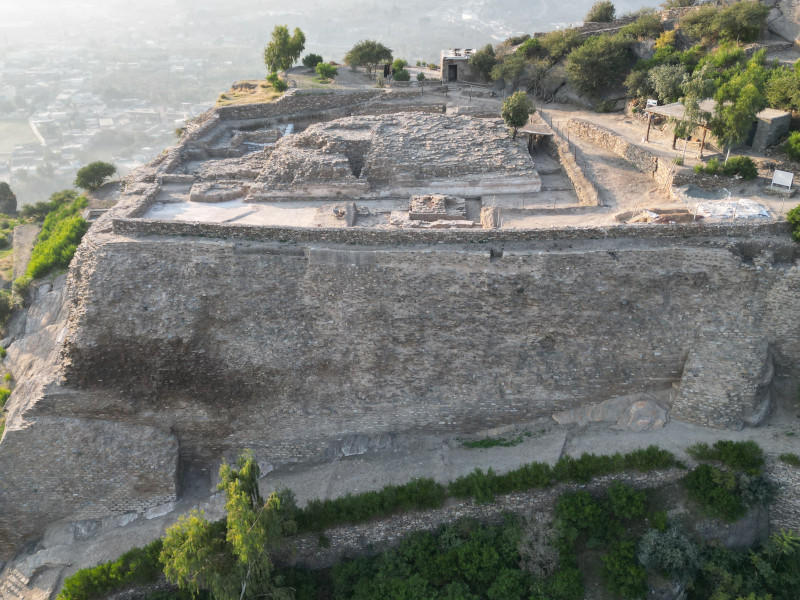
This phase corresponds to the construction of the Brahmanical temple and an adjacent chapel during the early Shahi period (end of the 7th century CE = Macro-phase 8a), documented on the eastern terrace of the acropolis along with adjacent structures (including the new bastions of the terrace). The temple was largely modified during the late Shahi phase (Macro-phase 8b) and remained in use until the beginning of the 11th century. The last renovation of the temple is dated by an inscription to the time of Jayapaladeva, the last Shahi king (see site 3). A second temple with a small four-column hall documented in trench BKG 2/13 can be attributed to the subsequent phase (Macro-phase 8b). For more information, see "Vajirasthāna. Archaeology of the Barikot Hilltop (Swat, Pakistan)".
Corresponds to the early Islamic phases (Ghaznavid/Ghurid, 11th-12th century) documented on the acropolis by military structures and by a cemetery in the lower part of the city (Macro-phase 9a). A later phase, defined by a local material culture (Dardic), has been documented on the hill with terraced housing structures and in trench BKG 13 by a ritual installation perhaps linked to cremation rites. The abandonment phase of this last horizon is dated to the 16th century, at the time of the Yusufzai Pashtun conquest (the latter ultimately corresponds to macro-phase 10). For more information, see "Vajirasthāna. Archaeology of the Barikot Hilltop (Swat, Pakistan)".
Photo gallery