

Workshop series
Learning with…
November 2025-February 2027
The ERC project HealthXCross at the Department of Philosophy and Cultural Heritage of Ca' Foscari University of Venice, through the Radical Epistemologies research cluster at NICHE Institute for Environmental Humanities, organizes an experimental workshop series curated by Antonia Majaca in collaboration with Roberta Raffaetà.
The series investigates epistemological conditions that enable or foreclose just ecological futures.
Building on HealthXCross’ exploration of how microbiome science reconfigures health through microbial entanglements, this series deepens the investigation across scales, from microbial to planetary scales. It examines how colonial modernity and metabolic rifts structure environmental knowledge production, asking what can be known, by whom, and through which legitimating apparatuses. Venice’s lagoon becomes a living laboratory for this inquiry. Its brackish waters host complex microbial communities mediating between marine and terrestrial worlds, while the city’s historical wealth confronts contemporary dissolution – embodying the metabolic circuits connecting social reproduction, waste flows, and environmental politics that the cluster investigates.
The “Learning With…” workshop series follows a recursive protocol where conceptual traces from each gathering transform subsequent inquiries, creating an alluvial process of collective theorization. This methodology of “epistemic communing” parallels HealthXCross’ multi-sited and transdisciplinary approach, recognizing how variations in methods, contexts, and colonial histories produce fundamentally different ways of knowing and being in entangled worlds. Through this process, the series interrogates how colonial categories of nature and the human continue structuring environmental governance while articulating counter-foundations for political ecology.
Convening political ecologists, artists, theorists, community practitioners, and international scholars, the programme advances frameworks for prefiguring transformative political ecology. This experimental format extends HealthXCross’ investigation into how scientific knowledge transforms cultural concepts, proposing transversal methodologies that recognize health, resilience, and environmental futures as fundamentally entangled across scales from the microbial to the planetary, along lines of gender, class, race, and coloniality.
10.00-13.00, Malcanton Marcorà (Aula Biral), Dorsoduro 3484/D, 30123, Venice
Speakers: Imani Jacqueline Brown (Queen Mary, University of London) in dialogue with Antonia Majaca
This workshop with Imani Jacqueline Brown explores the recursive histories of extractivism and resistance across the Atlantic, tracing connections between maroon and Indigenous practices of world-making, anti-colonial struggles, fossil-fuel infrastructures, and contemporary ecological catastrophe. Moving against linear narratives of historical causality, Brown brings together the Akan concept of 'sankofa', the Bakongo 'dikênga', spiral development, diffraction, and fractality to think about forms of return that do not simply repeat the past. Through these different figures of recursion, the workshop asks how extractive systems mutate in response to resistance, but also how solidarities travel, transform, and re-emerge across different historical and geographical conditions. Fractality thus becomes a way of attending simultaneously to the persistence of extractive violence and to the possibility of generating new, non-assimilative forms of solidarity and ecological reparation.
10.00-13.00, Malcanton Marcorà (Aula Biral), Dorsoduro 3484/D, 30123 Venice
Speakers: Camilla Hawthorne (University of California Santa Cruz) in dialogue with Antonia Majaca Friedman (Ca' Foscari University of Venice)
In this workshop, we will read excerpts from Cedric Robinson's Black Marxism, with a focus on his discussion of the Mediterranean (including Venice). How did Robinson reorient the history of global racial capitalism on the Mediterranean region? How did he address histories of slavery, colonialism, and racialism in the Mediterranean? How did he articulate the Black Mediterranean and the Black Atlantic? And what are the implications of his analysis for our understanding of the relationship between racism and capitalism both past and present?

10.00-13.00, Malcanton Marcorà (Aula Biral), Dorsoduro 3484/D, 30123 Venice
Speakers: Luciana Parisi (Duke University) in dialogue with Antonia Majaca Friedman (Ca' Foscari University of Venice)
The session reads Wynter and Simondon together to ask what a critique of instrumentality looks like when it begins from this history: the colonial and patriarchal mentality that has cast nature and technics as alien to humanity, reason, and life, and the work of undoing it.
10.00-13.00, Malcanton Marcorà (Aula Biral), Dorsoduro 3484/D, 30123 Venice
Speakers: Khadija von Zinnenburg Carroll (Central European University Vienna) in dialogue with Wietske Maas
Speaking from the experience of creating the Repatriates Collective and the Tide of Returns exhibition (commissioned and produced by TBA-Academy), Khadija von Zinnenburg Carroll reflects on the methodologies of long-term collaborative work with communities in the process of receiving repatriations from European museums. The return of an “object” does not resolve the question of whose knowledge of it counts — it opens that question. The seizure that made return necessary also destroyed the oral, ceremonial, and ecological practices through which that knowledge had been held. This seminar asks how storytelling can carry that knowledge, and what it means to live the care that transmission requires.
14.00-18.00, Ca' Bottacin (Aula B), Dorsoduro 3911, 30123 Venice
Speakers: Gloria Chan-Sook Kim (University of California Riverside) in dialogue with Antonia Majaca Friedman (Ca’ Foscari University of Venice)
In this session, we explore how emerging microbes and their futures “in potentia” become “scaling mediums” through which ecologies, world systems and infrastructures, and global and social relations are studied, felt, and experimented with. We think through a set of images, which use computational modes of seeing to transmute the inherent non-knowability of emerging microbes into view: algorithmically modelled futures, satellite-tracked wildlife, global logistics computing, and virus data banks.
14.00-18.00, San Giobbe (Room 2), Cannaregio 873, 30121 Venice
Speakers: Andrea Núñez Casal (Centro de Ciencias Humanas y Sociales - CCHS-CSIC) in dialogue with Antonia Majaca Friedman (Ca’ Foscari University of Venice)
This session proposes a genealogical and speculative inquiry into immunity, not as a stable biomedical object but as a shifting set of manuals: instructions and epistemic protocols through which bodies, microbes, and differences are rendered governable or curable.
10.00-13.00, Malcanton Marcorà (Aula Biral), Dorsoduro 3484/D, 30123 Venice
Speakers: Kodwo Eshun and Anjalika Sagar (The Otolith Group) in dialogue with Antonia Majaca Friedman (Ca’ Foscari Univeristy of Venice)
Founded in 2002 by Anjalika Sagar and Kodwo Eshun, The Otolith Group has developed one of contemporary art's most sophisticated engagements with oceanic themes, theorizing water as simultaneously historical archive, site of colonial violence, and space of speculative futurity. Their theoretical frameworks synthesize Black Atlantic theory, Caribbean philosophy, Afrofuturism, and political ecology into an aqueous epistemology centered on liquidity's duality: the unrepresentable violence of the historic trade in humans across oceans and the abstraction of contemporary financial capital. This workshop engages with The Otolith Group's aqueous methodologies to explore how amphibious conditions might offer alternative frameworks for understanding the entangled histories of maritime capital, ecological crisis, and speculative resistance.
Dialogues Across Microbiology, Art and Anthropology
November-December 2024
The ERC project HealthXCross at the Department of Philosophy and Cultural Heritage of Ca’ Foscari University of Venice organises a series of dialogues, lectures, and panel discussions that probe the entangled relationships between microbial life, scientific practice, and transdisciplinary ecological thought. The program maps a trajectory from bio-geological interdependencies to the pluralistic integration of Indigenous and Western scientific traditions, before delving into the under-examined creative dimensions of scientific practice itself. In its final session, the series crystalizes around microcosmic approaches to planetary ecology, staging an encounter between diverse modes of worldmaking. By convening microbiologists, philosophers, artists, and designers in sustained dialogue, the program advances new frameworks for conceptualizing health, resilience, and environmental crisis. This experimental format manifests the HealthXCross project's broader investigation into emergent intersections between scientific research, artistic practice, and philosophical and anthropological inquiry, proposing alternative methodologies for confronting the urgent planetary transformations.
9.30
Ca' Foscari University of Venice - Department of Philosophy and Cultural Heritage (DFBC)
Malcanton Marcorà - Aula Biral, Dorsoduro 3484/D, 30123 Venice - Italy
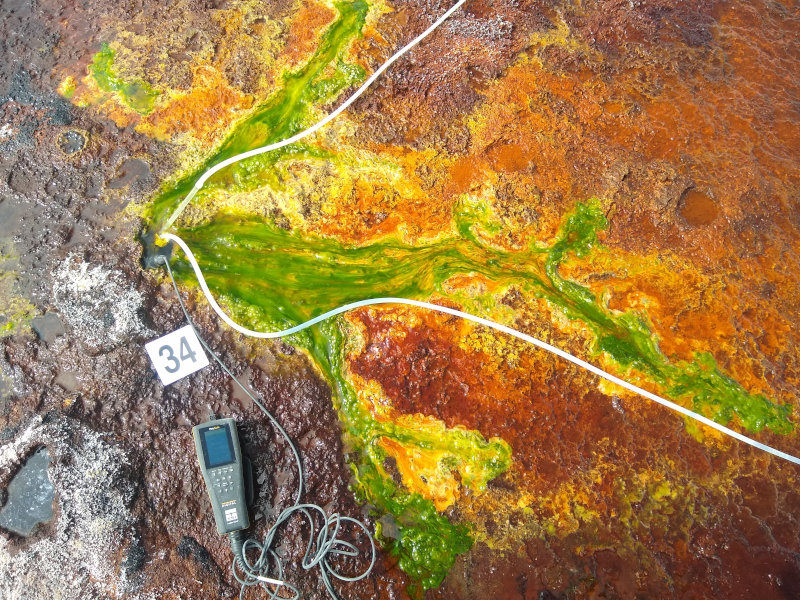
- Speakers: Kriti Sharma (UC Santa Cruz), Donato Giovannelli (University of Naples Federico II)
- Chair: Roberta Raffaetà (Ca’ Foscari University of Venice)
- Discussants: HealthXCross team
Through a dialogue between Giovannelli's research on extremophiles and deep-sea microorganisms and Sharma's philosophical investigations into scientific practice, this session explores how microbial life at the intersection of biology and geology transforms our understanding of planetary relationships and challenges traditional boundaries between living and non-living systems. The conversation, moderated by Dr. Roberta Raffaetà, will probe fundamental questions about biological-geological co-evolution and its implications for environmental change.
14:00
Ca' Foscari University of Venice - Department of Philosophy and Cultural Heritage (DFBC)
Malcanton Marcorà - Aula Biral, Dorsoduro 3484/D, 30123 Venice - Italy
- Speaker: Maud Quinzin (World Maritime University, IMO, Malmö)
- Chair: Roberta Raffaetà
- Discussant: Kriti Sharma (UC Santa Cruz)
Quinzin's talk examines how integrating Indigenous knowledge systems with mainstream scientific approaches opens perspectives on resilience across living systems. Her research, spanning from microbiomes to ecosystems, challenges dominant scientific classifications while exploring alternative frameworks that promote ecological democracy. Through dialogues with Indigenous communities and interdisciplinary collaborations, her work develops new approaches to understanding health and environmental justice that bridge different knowledge traditions.
17:15
Ca' Foscari University of Venice
Ca' Foscari - Aula Baratto, Dorsoduro 3246, 30123 Venice - Italy
- Speaker: Kriti Sharma (UC Santa Cruz)
- Chair: Roberta Raffaetà (Ca’ Foscari University of Venice)
- Discussant: Shaul Bassi (Ca’ Foscari University of Venice)
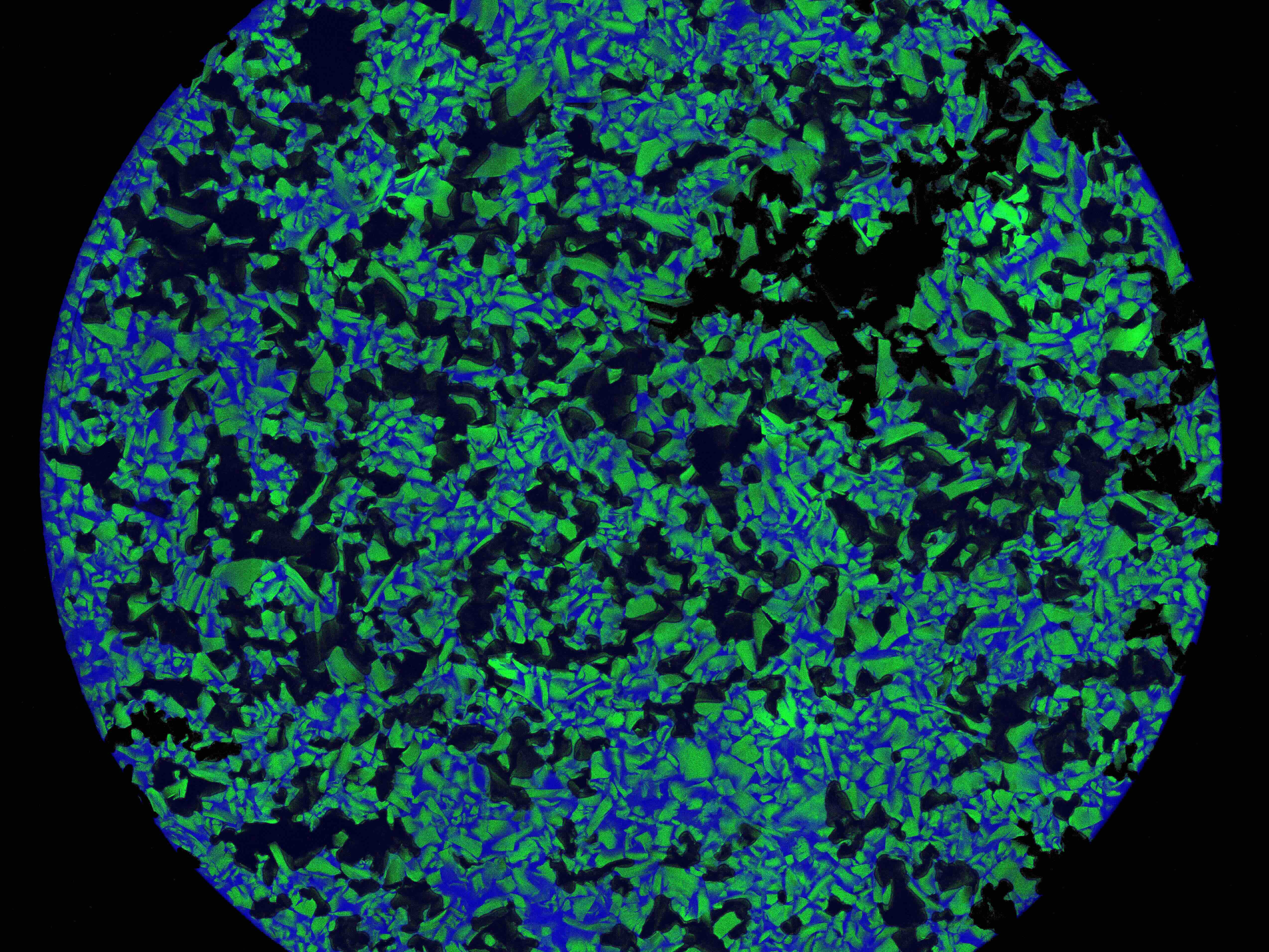
Sharma explores how scientific practices – from experimental design to observation – are inherently artistic, requiring sensitivity to beauty, imagination, and craft. Drawing from her decade-long research on diverse microbial contexts, from deep-sea sediments to seagrass ecosystems, she develops a poetic approach to scientific practice that reveals new ways of understanding life beyond conventional interpretations, suggesting alternative possibilities for experiencing and describing human-microbial relationships.
16:00
Fondazione Bevilaqua La Masa
Palazzetto Tito, Dorsoduro 2826, 30123 Venice - Italy
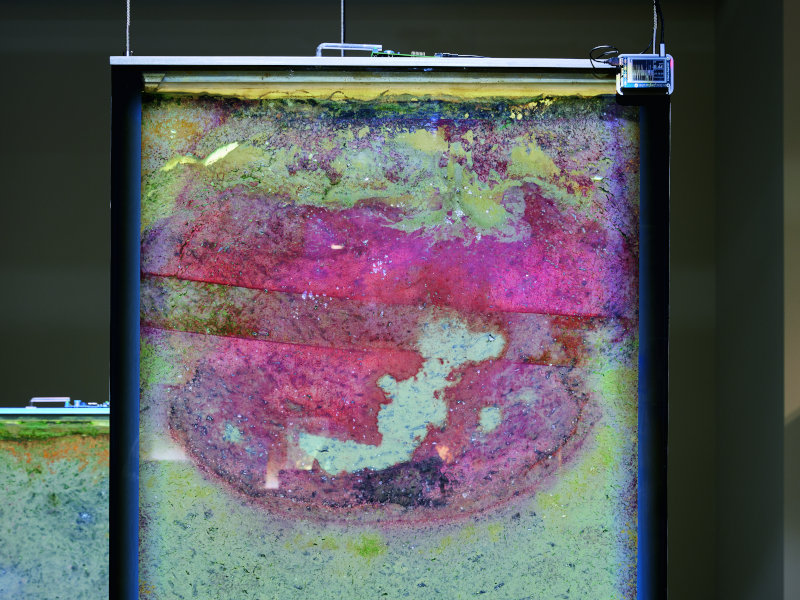
This interdisciplinary seminar, organized by the HealthXCross ERC research project in collaboration with NICHE Institute and Fondazione Bevilacqua La Masa, explores ecology through diverse methodological lenses. Bringing together art-based researchers, scientists, and philosophers, the seminar examines how methodologies across disciplines intertwine in novel forms of investigation and worldmaking. It proposes examining microcosmic-planetary relationships while offering perspectives capable of redefining conceptions of health beyond anthropocentric views, without losing sight of the political epistemology of contemporary technoscience.