

WITT-ART
Wittgenstein in Modern and Contemporary Art



Project
WITT-ART is a three-year EU-funded project, based at Ca’ Foscari University of Venice, Department of Philosophy and Cultural Heritage. It focuses on Ludwig Wittgenstein and the ways in which a number of 20th- and 21st-century artists have interpreted his philosophy and “converted” it into artworks.
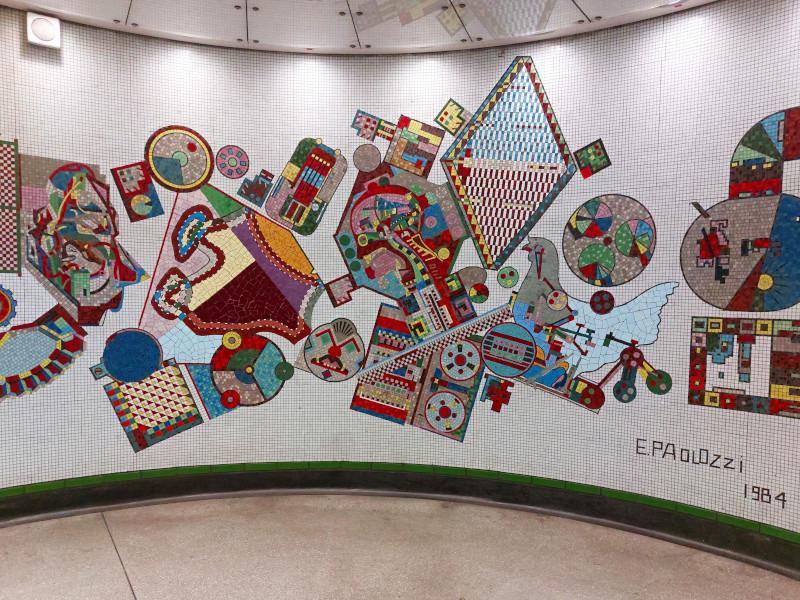
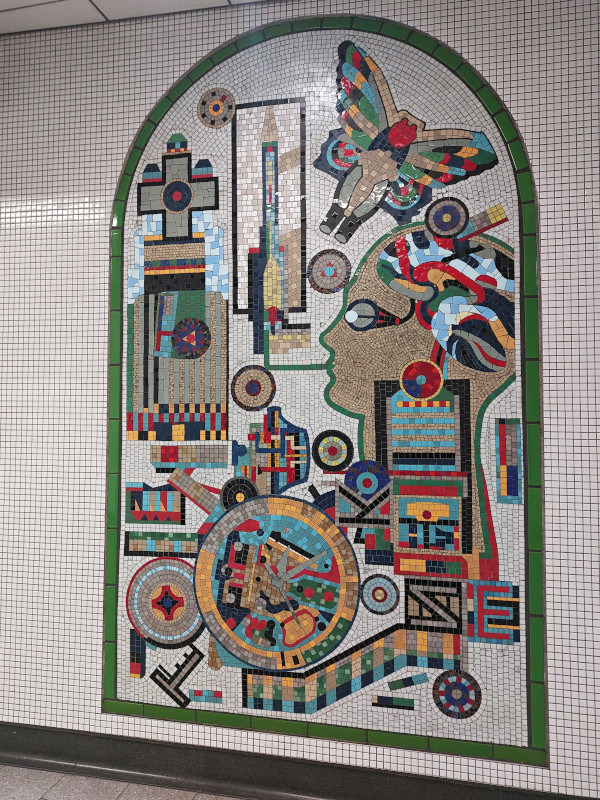
At the core of WITT-ART are three artists whose engagement with Wittgenstein reveals unique continuity and significance: Eduardo Paolozzi, Joseph Kosuth, and Bruce Nauman. From this central triad, WITT-ART aims to expand to a broader constellation of “Wittgensteinian” artists – among them Jasper Johns, Willem de Kooning, Franz West, Mel Bochner, Kenneth Goldsmith, Agnes Martin, Renée Green, Carolee Schneemann, Barbara Bloom, Coleen Fitzgibbon, Maria Bussmann, Patti Smith, and Yvonne Rainer – whose diverse work also traces elements of Wittgenstein’s influence or echoes his philosophical concerns.
Specifically, WITT-ART addresses a key question: can artists contribute to our understanding of Wittgenstein’s philosophy – and if so, how? Starting from this particular case, on a more general level, WITT-ART sets out to investigate the two-way relationship between philosophy and art, showing how each discipline can illuminate the other.


Research
Compared to existing scholarship, WITT-ART adopts a new and different (though complementary) approach: it aims not only to gain a deeper understanding of the work – particularly of Paolozzi, Kosuth, and Nauman, though not exclusively – by bringing its Wittgensteinian component into focus, but also to explore how their work might enrich, or even reshape, the understanding of Wittgenstein’s philosophy.
This approach emphasises a two-way relationship between philosopher and artist: not only from philosopher to artist, but also from artist to philosopher. While a philosopher can influence an artist, the artist – by “acting upon” philosophical ideas in their work – can, in turn, shed light on overlooked, undetected, or barely glimpsed aspects of that philosopher’s thought. The underlying insight is that an artist can select, privilege, connect, and highlight elements of a philosopher’s thinking that might escape notice or remain in the background of scholarly interpretation.
WITT-ART thus fundamentally aims:
- to show how artists such as Paolozzi, Kosuth, and Nauman, through their work, have contributed to the interpretation and understanding of Wittgenstein
- to use this particular case as an enlightening model for a more comprehensive understanding of the relationship between philosophy and art.
This twofold overall objective is articulated through four Specific Objectives (SOs).
Mapping Wittgenstein’s influence on Paolozzi, Kosuth, and Nauman
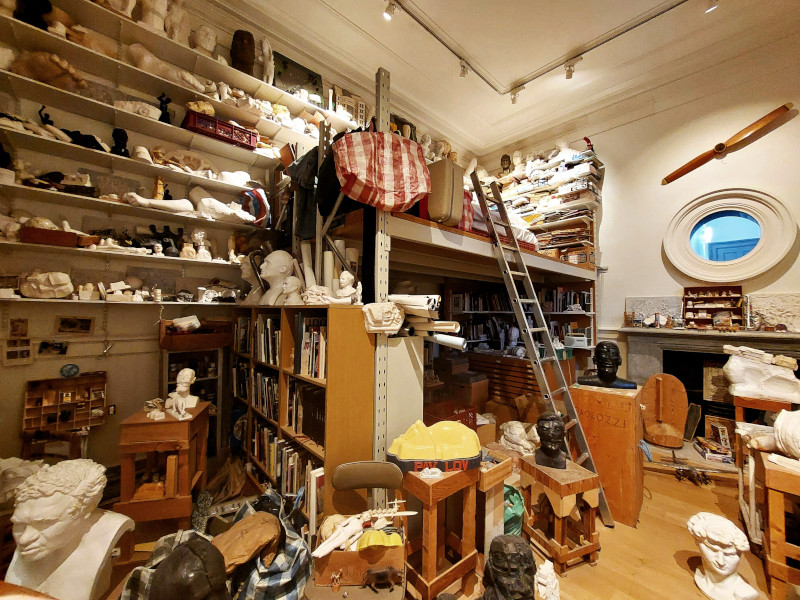
SO1 is to establish how (particularly) Paolozzi, Kosuth, and Nauman interpreted and articulated their engagement with Wittgenstein. This involves collecting, analysing, and comparing the texts (essays, catalogue entries, and interviews) by these artists that reference Wittgenstein, either explicitly or implicitly. It is also crucial to identify which of his works they read and engaged with, as well as the critical literature to which they had access. The aim is to construct a “synoptic view” of the Wittgensteinian “materials” – including, in certain cases, biographical aspects – that influenced their art, highlighting both the convergences and divergences in how each artist transformed philosophical ideas into their respective artworks.
Clarifying and redefining the concept of influence
SO2 consists in clarifying and redefining the concept of influence. What do we mean when we say that one artist has influenced another? And how can we account for influence across different fields? For example, can the commonly used concept of influence fully explain how Wittgenstein’s ideas were “appropriated” by artists such as Paolozzi, Kosuth, and Nauman? A new understanding of influence will be proposed, drawing on the perspectives of Paolozzi – who prefers the term “collaboration” to describe his relation with Wittgenstein – and Wittgenstein himself. Influence will be understood in a strong sense, occurring when the influenced party modifies, to some degree, the understanding of the influencer. A conceptual map will be constructed, in the spirit of Wittgenstein, to show that the term “influence” has multiple, yet interconnected, meanings and uses.
Presenting a comparative overview of Wittgenstein-inspired artworks
SO3 concerns the analysis of artworks that are inspired by Wittgenstein to varying degrees and on multiple levels. It aims to explore how his philosophy has been concretely transformed into art. The artworks will be compared in terms of their similarities and differences, their contexts of creation, and their immediate and long-term critical reception.
Reinterpreting Wittgenstein through artistic practice
SO4 is to examine how artists contribute to the interpretation and understanding of Wittgenstein’s philosophy. It focuses on the ways in which key themes central to Wittgenstein scholarship – such as Bild, logic and grammar, language games, and the significance of the biographical-existential dimension in philosophy – are taken up, questioned, and interpreted by artists influenced by Wittgenstein. Art is not conceived merely as an illustration or visual translation of philosophy, but an alternative and powerful mode of practising it – one capable of challenging, clarifying, and refining philosophical issues. SO4 thus highlights the dynamic intersection between philosophy and art, showing how artistic practice can offer fresh insights into philosophical interpretation while simultaneously expanding the boundaries of both disciplines.
WITT-ART is inherently interdisciplinary: it both searches for philosophy (specifically, Wittgenstein) within art (specifically, Paolozzi, Kosuth, and Nauman) and brings art into philosophy (by incorporating artistic interpretations of Wittgenstein into the critical literature on his work); consequently, it requires and fosters a dialogue between philosophy and art, engaging both in terms of content and methodology.

Academic impact
Through conferences, seminars, workshops, courses, and open-access publications, WITT-ART will contribute new insights, methodologies, and resources with the potential to inspire further research and shape future curriculum development.
WITT-ART’s interdisciplinary framework – connecting philosophy and art – opens new pathways for students and scholars to explore both its core and related themes with greater nuance, sparking original lines of research and guiding the design of curricula that integrate philosophical and artistic perspectives.
By offering a richer, more integrated approach to Wittgenstein’s philosophy and the work of artists such as Paolozzi, Kosuth, and Nauman, WITT-ART provides a flexible model that can be fruitfully applied to future studies. It encourages collaboration across disciplines and deeper investigation of the interplay between philosophical thought and artistic production, while highlighting novel directions for research aligned with its themes and approach – including, for example, the growing “dialogue” between Wittgenstein and several contemporary women artists.
Societal impact
WITT-ART aims to promote public engagement and civic and cultural enrichment.
By working to build partnerships with museums, galleries, and other cultural institutions, WITT-ART hopes to support joint events, exhibitions, and educational programmes that bring scholarly research to wider audiences. Above all, it strives to enhance the way modern and contemporary art is experienced and to deepen public understanding of its relationship with philosophy, while addressing both the increasingly widespread “commercialisation” of art and the sometimes excessive “specialisation” of philosophy. In particular, through focused case studies on Wittgenstein and the artists he inspired, it offers non-specialists an accessible approach to art that emphasises its connections with philosophy, encouraging a more informed and open appreciation of both.
As a result, WITT-ART is expected to generate a positive social impact, including:
- the public engaging with modern and contemporary artworks in a more thoughtful and informed way;
- a greater understanding of art and philosophy, helping to reduce related biases, prejudices, and distrust;
- increased awareness of the role of art and philosophy in fostering active, critical, and reflective citizenship.
Long-term vision and sustainability
The international network established through WITT-ART – connecting scholars, institutions, and experts within and beyond academia – is intended to endure well after the project ends. WITT-ART’s long-term vision is to sustain both its findings and the network it has built, while fostering a lasting scientific and professional environment that:
- generates new research building on its outcomes;
- develops further exhibitions and collaborative partnerships with institutions outside academia as integral parts of ongoing research, ensuring continued engagement with both scholarship and the public.