

W-Deforest
Indigenous women caught between intimate violence and deforestation processes
Project
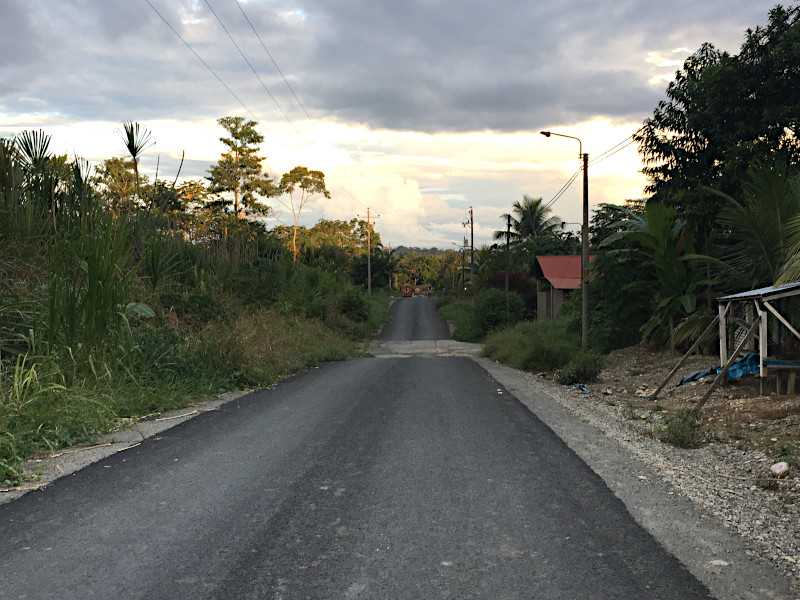
More than 80% of the total deforestation in the Peruvian Amazon, and in Latin America as a whole, is due to the concatenation of various factors. In particular, the opening of illegal roads paves the way for the informal timber trade market, followed by the expansion of oil palm and cacao plantations, as well as illegal coca crops.
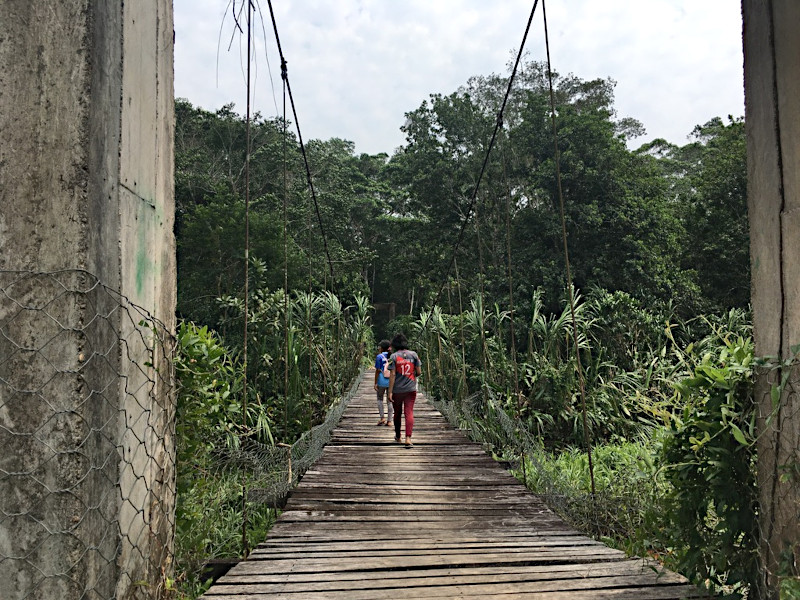
Nearly 830,500 kilometers of roads — a length equivalent to 20 times the Earth's circumference — are now located within 3,837 South American reserves, representing 24% of the land area of the American continent. Roads within or near protected areas cause significant environmental impacts, such as habitat fragmentation, wildlife decline, roadkill, and changes in reproductive patterns. Furthermore, they increase pollution and facilitate access to illegal activities such as poaching and unlawful logging.
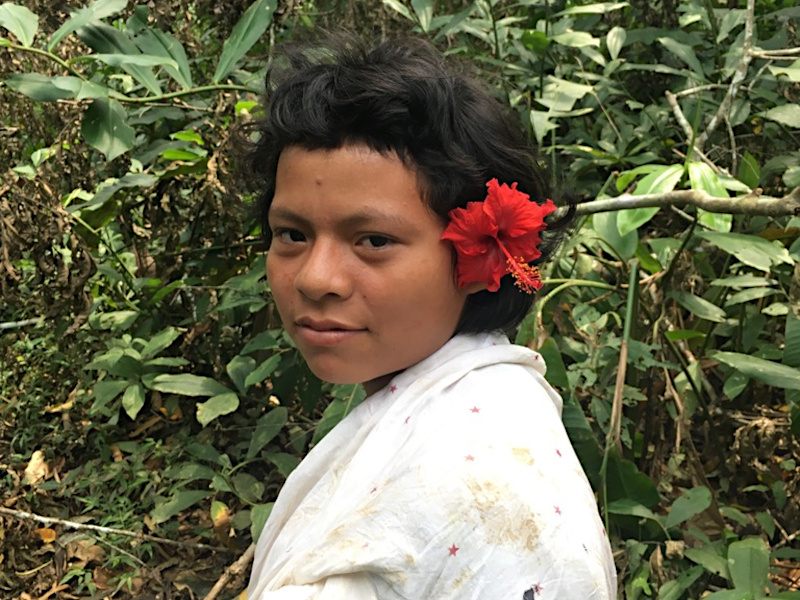
While many Indigenous women are actively involved in the survival of protected natural areas, others play a pivotal role in deforestation. Focusing on the Yine people in the Madre de Dios region of the Peruvian Amazon, this case study examines the gender dimensions inherent in road construction and the small-scale, informal timber trade operating from the buffer zone of Manu National Park — one of the world's most ecologically significant protected areas. Despite being the last link in the chain of ethnic and gender subordination, Yine women seek to redeem their position of subordination and economic, physical and affective vulnerability through their labour. On this basis, W-Deforest explores a unique link for social sciences: gender and ‘intimate violence’ in relation to environmental tensions.
Research
How are gender-based violence and environmental crimes correlated?
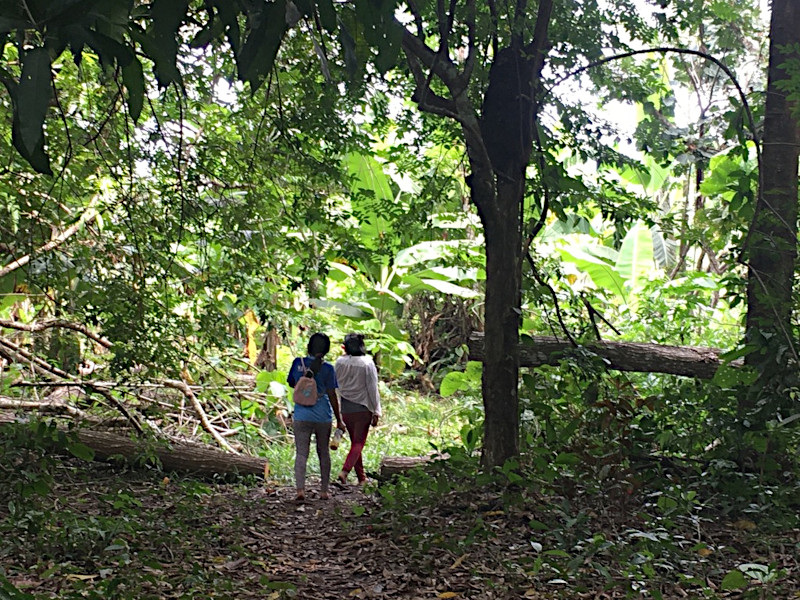
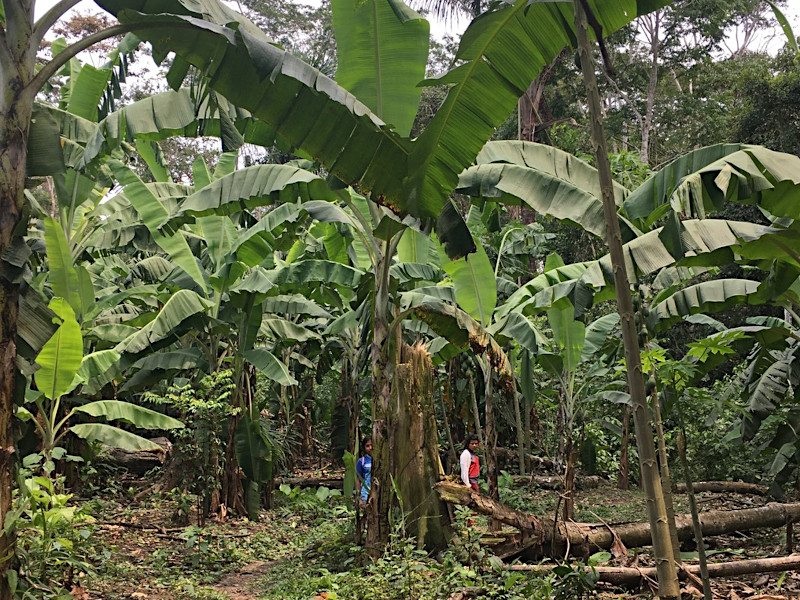
Focusing on Madre de Dios, Peru’s most affected region, and specifically on the case of the Yine people living in the Fitzcarrald district — the buffer zone of the Manu National Park — deforest explores the gender dimensions inherent in road construction and the expansion of the small-scale, informal timber trade.
Behind many environmental conservation projects, Indigenous women play a key role in processes linked to deforestation — even within protected areas that are highly vulnerable to climate change. Taking inspiration from a group of women from the Yine people of the Peruvian Amazon, W-Deforest focuses on the socio-cultural complexities, economic hardships, and the multiple forms of violence these women routinely endure, both in domestic and professional spheres. In this context, the creation of an original and creative podcast becomes a powerful tool to amplify their voices and restore visibility, framing their work not only as a form of personal empowerment, but also as a path toward economic and emotional autonomy. The primary objective is to explore how systemic and everyday violence shapes and affects indigenous women’s relationship with their environment, challenging the historically rooted narratives of affection, care, and symbolic belonging to the land.
Despite being at the bottom of the pyramid in terms of ethnic and gender subordination, these women seek to reclaim their position of vulnerability through their work within a historically male-dominated production chain. A lot of studies on gender-based violence consider that Indigenous women in marginalized contexts are constantly exposed to a series of risks to their physical, reproductive, and emotional health, from the workplace to the domestic sphere — a concept known as 'intimate violence.' On this basis, W-deforest explores an unprecedented link for the social sciences: namely, gender and intimate violence in relation to environmental tensions.
How does the violence suffered historically and structurally by indigenous women shape their current relationship with the deforestation process?
The overall aim of W-Deforest is to foster greater understanding and visibility within the social sciences and wider society regarding the continuum between intimate gender-based violence and deforestation.
Concurrently, the project seeks to:
- introduce a new perspective into ethnographic studies by considering the role of Indigenous women in Amazonian deforestation;
- achieve meaningful local impact through cross-cutting dialogues;
- propose an innovative research methodology bridging anthropology, community psychology, and Digital Humanities.
Among the project's various deliverables, podcasting stands out as the most innovative output, contributing to multiple objectives:
- co-production of new scientific knowledge;
- enhanced self-awareness among Indigenous women;
- tailored dissemination activities;
- a profound resonance among a diverse European audience.
New and events
Attended scientific conferences and meetings
2026
- 19-23/10/2026 - International conference «Réenchanter l’université? Défis éducatifs et éthiques de l’inclusion des savoirs autochtones à l’université» [FRA]
University of Nanterre, Paris (France)

Ca' Foscari University of Venice (Italy)
University of Bologna (Italy)
- 30/09/2026 - Book launch “Lanzas del tinta. Los awajún en busca del poder” (Quito y Lima, Abya Yala Editorial)
Librería Sur, Lima (Peru)
Pontificia Universidad Católica del Perú, Lima (Perú)
Centro Bartolomé de las Casas, Cuzco (Perú)
Pontificia Universidad Católica del Perú, Lima (Perú)
Universidad del Pacifico, Lima (Perú)
- 29/06-3/07/2026 - International conference “POLLEN 2026 - Political Ecology Network”, University of Barcelona (Barcelona, Spain)
- 20-22/05/2026 - International conference “Orizzonti LatinoAmericani” [ITA], University of Torino, (Torino, Italy)
- 12/05/2026 - International seminar “America Indigena e stati nazionali: diritti, progetti e cooperazione” [ITA], University of Padua (Padua, Italy)
2025
- 2-3/12/2025 - International conference «Forêt amazonienne et frontières extractives : transformations et défis contemporains pour l’Amazonie et ses mondes» [FRA]. Université Catholique de Louvain (Louvain la Neuve, Belgium)
- 15-17/10/2025 - Workshop “Espacios, territorialidades y políticas indígenas en los confines del Imperio y Estados” [SPA], Universidad de Sevilla (Sevilla, Spain)
- 25-27/09/2025 - International congress «SPERARE / DISPERARE / DESIDERARE» [ITA]. V National of SIAC (Società Italiana di Antropologia Culturale) at University of Basilicata (Matera, Italy)
Last publications
- September 2026 - Romio, S. (2026). “Lanzas del tinta. Los awajún en busca del poder”. Quito y Lima, Abya Yala Editorial
- May 2026 - «El amor en los tiempos del caucho. Pactos matrimoniales y trabajo coercitivo entre los awajún y los patrones de la Amazonía peruana». Tipití: the journal of the Society for Anthropology of Lowland South America, 22 (1), pp. 116-134
- May 2026 - «”Un poquito más nos ha unido el Covid". Pratiche di auto-governo durante la pandemia in una comunità indigena dell'Amazzonia peruviana» (co-writing with Piccoli, E.). Dada Rivista di Antropologia Post-globale, Dossier: Etnografie Sindemiche, pp.153-182
- April 2026 - «Road Blockades During the Pandemic: Indigenous Citizenship and New Territoriality» (co-writing with Ioris, A.; Piccoli, E.). Area, 58 (1)
Media coverage
- 9/12/2025 - «Ecologia del dominio: intrecci di potere tra specie, genere e territori» [ITA], by Maria Viktoria Bittner, Equilibri Magazine
- 15/10/2025 - «Donne e deforestazione: Il legame tra violenza ecologica e di genere nelle comunità indigene amazzoniche» [ITA], by Federica Scotellaro, cafoscariNEWS
Team

Principal Investigator
Supervisor