

TES
Tracing Eastern Sicily's networks (XI-VI centuries BCE)


During these centuries, the region was inhabited by communities of diverse cultural origins and functioned as a major node within wider networks of mobility and exchange across Sicily and the ancient Mediterranean. Rather than framing interactions solely in terms of encounters between Greek settlers and local populations, the project focuses on the complex social, cultural, and economic networks that structured the territory and drove processes of transformation.
A central objective of TES is the reconstruction of relational networks among settlements and communities, with particular attention to the circulation of natural resources, technologies, and knowledge. By tracing and visualizing these connections, the project aims to reveal the complexity of cultural interactions and processes of territorial change.
Drawing upon decades of archaeological research and newly available digital collections, TES adopts an integrated Digital Humanities approach, combining archaeological, epigraphic, historical, and environmental data.
These datasets will contribute to the development of a dynamic and interactive digital map aimed at exploring political organization, mobility patterns, and long-term social transformations in southeastern Sicily across the centuries preceding and accompanying processes traditionally associated with Greek colonization.
Methodology
The TES project adopts an integrated Digital Humanities research infrastructure for the collection, management, and analysis of archaeological and epigraphic data.
Research data are produced and curated through Cadmus, an open-source scholarly editing and data management framework developed by Daniele Fusi. Within TES, Cadmus provides the collaborative editorial environment supporting data structuring, annotation, and long-term interoperability.
The platform enables the integration of heterogeneous datasets — archaeological, epigraphic, historical, and spatial — ensuring methodological transparency, reproducibility, and future data reuse. The digital workflow developed within TES contributes to the creation of structured research datasets that will support spatial analysis and digital mapping of southeastern Sicily.
Outcomes
Publications
- Valentina Mignosa, “The Materiality of Writing in a Multilingual Landscape: Epigraphic Habits in Archaic-Classical Sicily”, in “Cyprus and Sicily in Comparative Perspective”, De Gruyter Brill, fothcoming. ARCA: 10278/5103810
- Franco De Angelis, Valentina Mignosa, David Scahill, "Chiseling Connections. Architecture and Epigraphy between Corinth and Syracuse". In "Proceedings of the Conference Corinth and Syracuse. Connections, Exchanges, Influences", forthcoming. ARCA: 10278/5103807
- Valentina Mignosa, “Forme e usi del territorio. Indizi dalle fonti epigrafiche”, “Dialogues d’Histoire Ancienne. Supplément 28”, 2026. ARCA: 10278/5103809
- Arianna Esposito, Valentina Mignosa, "Deep Mapping Ancient Landscapes. Towards a Holistic Representation of Space through Digital and Spatial Humanities", in "Gli spazi della città: istituzioni, forme e funzioni", 2025. ARCA: 10278/5057911
Conferences and workshops

Seminar series in Digital and Public Humanities
Ca’ Foscari University of Venice, co-organized with the European Twinning Project GrECI
Seminars and training activities
- 05/02/2026 - Guest lecture: Valentina Mignosa, “Exploring Greek economic life through inscriptions”
University of Trier (online)
Research activities and field missions
- Oxford (UK) - Centre for the Study of Ancient Documents, University of Oxford
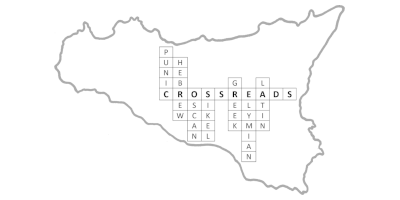
Collaboration within the ERC “Crossreads” project on digital epigraphy and data interoperability. - Trier (Germany) - University of Trier
Participation in the kickoff meeting of the ERC project “MarDepend: Maritime Dependencies in Antiquity”. - Warsaw (Poland) - University of Warsaw
Visiting scholar programme within the ERC project “Stone-masters”, focusing on material and epigraphic networks. - Ragusa and Cava d’Ispica (Italy) - Archaeological and Landscape Park of Ragusa
Fieldwork activities and preparation of archaeological research campaigns. - Catania (Italy) - International Conference of the ERC “Crossreads” project
Presentation of research results on resource networks and epigraphic practices in eastern Sicily within the “Crossreads” project. - Siracusa / Megara Hyblaea (Italy) - Archaeological Research Mission
Autoptic study and documentation of archaic inscriptions from Megara within the framework of TES research objectives.
Team
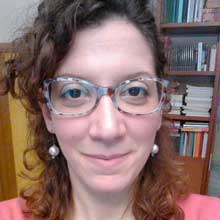
Researcher in Greek History - Project PI
Ca’ Foscari University of Venice
Valentina Mignosa is a researcher in Greek History at Ca’ Foscari University of Venice and Principal Investigator of the project TES - Tracing Eastern Sicily’s Networks. Her research investigates mobility, social dynamics, and epigraphic cultures in ancient Sicily, combining historical and archaeological approaches with Digital Humanities methodologies. She collaborates with several international research projects and participates as epigraphic specialist in archaeological missions in Sicily with institutions including the Deutsches Archäologisches Institut, New York University, and the Scuola Normale Superiore di Pisa. She is a member of the Centre for the Study of Ancient Documents (University of Oxford).
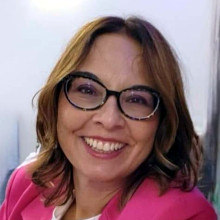
Elisabetta Tramontana is a classical archaeologist trained at the University of Messina, where she obtained her PhD in Archaeology after postgraduate specialization in Classical Archaeology at the University of Lecce. Over more than twenty years of professional activity, she has collaborated with several Italian Archaeological Superintendencies, particularly those of Ragusa, Siracusa, Catania, Agrigento, and Messina.
She has directed and participated in archaeological excavations in Calabria, Apulia, Sicily, and at Leptis Magna (Libya), and has presented papers at numerous national and international conferences. An expert in preventive archaeology and scientific consultant for public institutions and private companies, her research focuses on Attic figured pottery, settlement dynamics, and funerary practices of indigenous communities in south-central Sicily, as well as ceramic production from the Greek, Roman, and Late Antique periods.
Partner institutions and projects



- AncLa - Ancient Landscapes
PI: Stefania De Vido, Ca’ Foscari University of Venice