

Workshop
Ontological Pluralism International Workshop
Organized by PlONat (NICHE Centre for Environmental Humanities, Ca' Foscari University of Venice) and COSMOS (Husserl-Archives: Centre for Phenomenology and Continental Philosophy, KU Leuven)
Aims and topics
Over the past two decades, Ontological Pluralism has become an influential idea across the social sciences, most visibly within anthropology, but increasingly beyond it. It argues that a single, unified ontology is insufficient to account for the multiplicity of human practices, knowledge systems, and forms of life. Instead, it suggests that different collectives may inhabit or enact distinct ontological configurations. This proposal has generated substantial debate within anthropology, but not so much in philosophy, despite the fact that it appears to challenge long-standing philosophical commitments to universality, objectivity, and shared categories of thought.
This workshop seeks to examine how Ontological Pluralism raises questions that extend well beyond disciplinary boundaries, in particular concerning the status and scope of philosophical inquiry itself. If empirical disciplines claim that multiple worlds are enacted rather than merely interpreted, what follows for metaphysics, phenomenology, or the philosophy of science? Can the proliferation of ontological claims be accommodated within existing philosophical traditions, or does it require a revision of classical philosophical concepts, or even constitute a challenge to philosophy's traditional authority over the question of what there is?
At stake is not only the validity of pluralist proposals, but also philosophy's own self-understanding: its aspiration to universal categories, shared standards of rationality, and a unified conception of reality. Does the rise of ontological pluralism signal a genuine transformation in philosophy's relation to the human sciences, or is it a moment of conceptual confusion?
The workshop addresses these questions by bringing together scholars to critically explore the philosophical stakes of the ontological turn. Possible approaches include, but are not limited to:
- conceptual analyses of ontological pluralism: its meanings, internal distinctions, and theoretical commitments
- the status of ontology in empirical inquiry: whether ontological pluralism entails metaphysical pluralism, methodological pluralism, or a revision of classical ontological categories
- the problem of nature, culture, and reality in pluralist frameworks: rethinking universality, objectivity, and ontological disagreement
- ontological conflict and incommensurability: how to understand disagreement, translation, and comparison between heterogeneous ontological claims
- normative and political implications of ontological pluralism: whether and how ontological claims ground critique, resistance, or emancipation
- the risk of relativism and the criteria of validity in pluralist ontologies: philosophical responses to internal and external critiques
- historical and genealogical perspectives on ontological pluralism: continuities and ruptures with classical metaphysics, phenomenology, and structuralism
- the future of philosophy after the ontological turn: does ontological pluralism transform philosophy's self-understanding or its relation to the human sciences?
- ontological pluralism and phenomenology: plurality of worlds, lifeworlds, or interpretations of being, and their limits
- relations between ontological pluralism and contemporary philosophical theories, including naturalism, new realism, speculative realism, and post-Kantian ontology

Programme
- 09:30–10:00 Coffee break (welcome)
- 10:00–10:30 Presentation, Roberta Raffaetà - Gabriel Barroso
- 10:30–11:15 David Ludwig, “Ontological Syndicalism. Roles of Coalition Building for World Building”
- 11:15–12:00 Aurélie Névot “Putting an End to "the Ontological Turn" Returning to the Foundational Gesture of Structuralism”
- 12:00–13:00 Discussion
- 13:00–14:30 Lunch
- 14:30–15:15 Julián García-Labrador, “On Indeterminacy: How the Phenomenology of Givenness meets the Ontological Turn”
- 15:15–16:00 Jeanne Etelain, “One Earth, Many Worlds, and Contact Zones between them”
- 16:00–17:00 Discussion
- 09:30–10:15 Patrice Maniglier, “Active relativism, or Dionysian structuralism in practice”
- 10:15–11:00 Julia Turska, “Ontological pluralism in practice”
- 11:00–11:15 Coffee break
- 11:15–12:00 Davide Scarso, “The Look from Somewhere: Ontological Pluralism and Its Ghosts”
- 12:00–13:00 Discussion
- 13:00–14:30 Lunch
- 14:30–15:15 Patrick Flack, “Ontological Pluralism or Cosmogonic Threshold? - How Nature and Culture were Divided at Mekone”
- 15:15–16:00 Emanuele Caminada, “Anthropology of Plural Ontologies: A Phenomenological Challenge”
- 16:00–17:00 Discussion
- 17:00–17:15 Ending remarks, Gabriel Barroso - Ramon Mistral
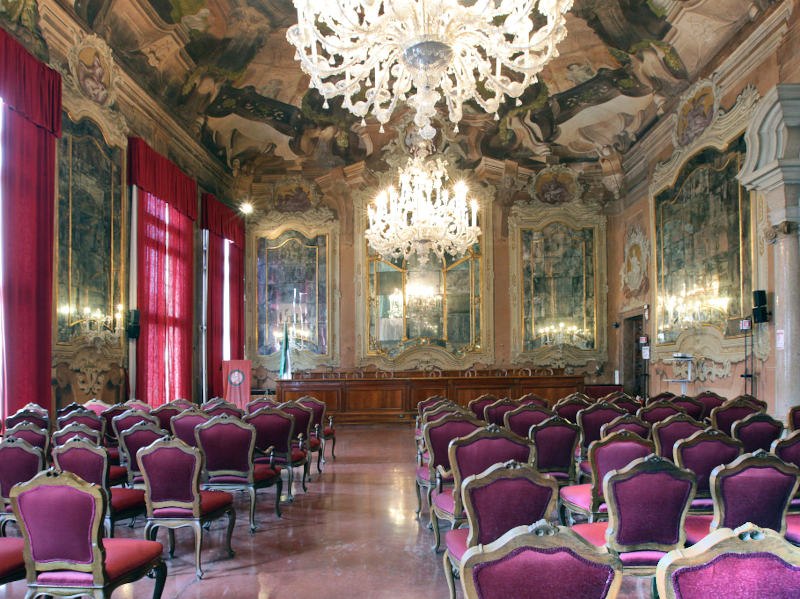
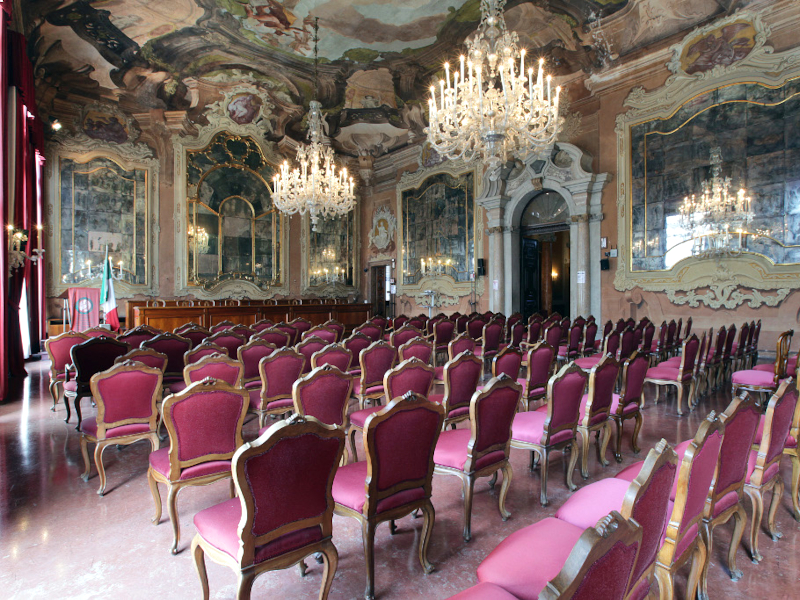
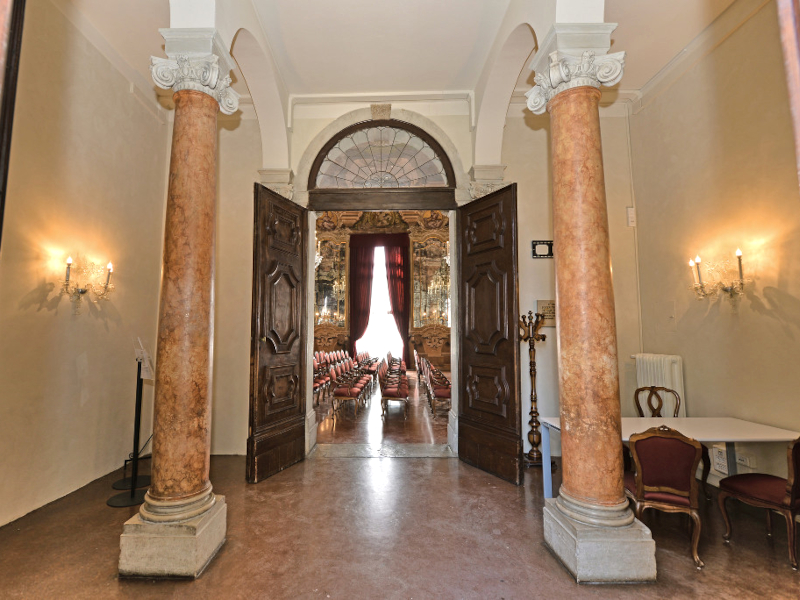
Ca' Dolfin (Aula Magna Silvio Trentin), Dorsoduro 3859/A, Venice (Italy)
To find Ca' Dolfin: head towards the Ca' Foscari bridge. Before crossing it towards the main Ca' Foscari building, Ca' Dolfin is immediately on the right, just behind a small garden. From Santa Lucia train station or Piazzale Roma, the venue is within walking distance. If coming by vaporetto, the closest stop is S. Tomà.
- Gabriel Barroso — KU Leuven (Husserl Archives)
- Mario Blaser — Memorial University of Newfoundland, Canada (unable to attend)
- Emanuele Caminada — KU Leuven (Husserl Archives)
- Jeanne Etelain — MO.CO/ESBA, Montpellier / Université Paris Nanterre
- Patrick Flack — Université de Fribourg
- Julián García-Labrador — Universidad Rey Juan Carlos, Madrid
- David Ludwig — Wageningen University & Research
- Patrice Maniglier — Université Paris Nanterre
- Ramón Mistral — Ca' Foscari University of Venice
- Aurélie Névot — CNRS / CECMC – EHESS, Paris
- Davide Scarso — CIUHCT – Universidade Nova de Lisboa
- Julia Turska — Copernicus Science Centre, Warsaw
Partners


The Ontological Pluralism International Workshop is organized as part of the activities of two research projects funded by the European Union's Horizon Europe programme under the Marie Skłodowska-Curie Actions: PlONat (GA: 101201907, Ca' Foscari University of Venice) and COSMOS (GA: 101155561, KU Leuven).