

DiLaDi
Digital Latin Dialectology: Tracing Linguistic Variation in the Light of Ancient and Early Medieval Sources
Project
DiLaDi is an interdisciplinary project that aims to perform a novel comprehensive study on the variation of the Latin Language over the 1st millennium A.D. considering the geographical and chronological perspectives as well as the transition from Latin to Romance by processing and analysing textual errors (deviations from the norm) of ancient and early medieval primary documents with the help of the Computerized Historical Linguistic Database of Latin Inscriptions of the Imperial Age (LLDB).
DiLaDi aims to give a breakthrough impetus to relevant research by involving a group of sources that have so far not been adequately considered in research: original parchment charters predominantly of private law from mostly the 7th-8th centuries, that are available in large numbers and are very rich in data reflecting linguistic changes, the involvement of which could open up further perspectives for the research of history and dialectology of late Latin based on working with a Database which has so far relied mainly on inscriptions.
The project is realized through the collaboration of the Department of Humanities of Ca’ Foscari University of Venice and the Research Group for Latin Historical Linguistics and Dialectology of the HUN-REN Hungarian Research Centre for Linguistics in Budapest.
As a result, this research will allow for a better understanding of the processes that led to the development of Romance languages and determined the linguistic, ethnic, and even cultural features of medieval and modern Europe.
Outcomes
- Adamik, B (2026): The Transitional Latin Case System of the 8th Century in Tuscany and Alemannia
- D’Argenio, E (2026): Exploring Nominal Agreement in Early Medieval Charters through the LLDB Database: Methods and a Pilot Sample from Tuscany (785–795)
- Adamik, B (2026): The Dialectological Situation of the Latin Language in Late Italy Before and in the Langobard Period as Evidenced in Inscriptions: The Phonological Aspect
- D’Argenio, E (2026): Spoken language in medieval legal charters? Revisiting some 8th century notitiae
- Adamik, B. (2025): The history of the Latin sound system of Etruria (Tuscany) from Augustus to Charlemagne
- Papini, A. (2025): Some (statistical) considerations on the use of inscriptions for the study of “sociolinguistic” variation in Latin: The problem of “frequency”
- Adamik, B. (2025): Back vowel mergers in Dalmatian Latin and Dalmatian Romance. Varietate delectamur: Multifarious Approaches to Synchronic and Diachronic Variation in Latin: Selected Papers from the 14th International Colloquium on Late and Vulgar Latin (Ghent, 2022), Turnhout, Brepols, pp. 387-403.
- Adamik, B. (2024): Vowel mergers in the Latin of the Danubian provinces of the Roman Empire as evidenced in inscriptions. Acta Antiqua Academiae Scientiarum Hungaricae 63, 4, 459-489.
- Papini, A. (2024): On the interaction between vowel confusions (˂e˃ for /i/ and ˂o˃ for /u/) and lexical stress in Latin inscriptions from Rome (ca. 119 BCE - ca. 600 CE). Acta Antiqua Academiae Scientiarum Hungaricae 63, 4, 561-574.
- D’Argenio, Elisa - Papini, Alessandro: Innovazioni lessicali nel database LLDB: il caso dei documenti toscani (paper, Digital Latin III, Siena, 15-16 June 2026)
- Papini, Alessandro: AI_Stripertus: un AI/transformer-based per la normalizzazione linguistica delle “Chartae Latinae Antiquiores” (paper, Digital Latin III, Siena, 15-16 June 2026)
- Ninth International Workshop on Computational Latin Dialectology (11-12 June 2026, ELTE Research Centre for Linguistics, Budapest)
- Papini, Alessandro: When the future meets the past. AI-assisted normalisation of historical Late Latin (ChLA) texts with AI_Stripertus (paper, The Classics Research Seminar, Helsinki, 19 March 2026)
- Papini, Alessandro: Sociolinguistics, statistics, and epigraphy. Vowel mergers in Latin inscriptions from Rome (120 BCE - 600 CE) [FIN] (paper, the Classical Philological Society, Helsinki, 17 March 2026)
- D’Argenio, Elisa: In dialogo tra l’edizione digitale delle Leges Langobardorum e il progetto DiLaDi: le parole delle leggi nei documenti notarili altomedievali (paper, The Leges Langobardorum Project: Practical and Theoretical Outcomes, Ca’ Foscari University of Venice, Venice, 11-12 December 2025)
- Adamik, Béla: The DiLaDi Project as a Complement to the MED.ITA Project: Early Medieval Non-Literary Latin Texts from Italy in the LLDB Database as Sources for the Study of Late Latin [ITA] (paper, Latino medievale e Lessicografia italoromanza: Convegno finale del progetto MEDITA, University of Naples - Federico II, 10-11 November, 2025)
- D’Argenio, Elisa: Dai documenti ai dati:le voces medii aevi nel database LLDB [ITA] (paper, Latino medievale e Lessicografia italoromanza: Convegno finale del progetto MEDITA, University of Naples - Federico II, 10-11 November, 2025)
- Papini, Alessandro: Voces Medii Aevi.Elementi lessicali “innovativi” nelle Chartae Latinae Antiquiores (paper, LESSICO LATINO E “TRANSIZIONE” TARDOANTICA, Ca’ Foscari Venezia, 24 September, 2025)
- D’Argenio, Elisa: At the linguistic crossroads of Roman and Langobard law: The legal lexicon of the Edict of Rothari (paper, THE 7TH GENERAL ILLA CONFERENCE: Language and Law in an Age of Uncertainty and Transition, Vytautas Magnus University, Kaunas, 3-5 September, 2025)
- 23rd International Colloquium on Latin Linguistics (9-13 June, 2025, University of Udine, project papers by Béla Adamik, Alessandro Papini and Cecilia Valentini)
- Eighth International Workshop on Computational Latin Dialectology (20-21 March, 2025, Department of Humanities, Ca' Foscari University of Venice)
- Seventh International Workshop on Computational Latin Dialectology (13-14 June, 2024, HUN-REN Hungarian Research Centre for Linguistics, Budapest)
Team
Ca' Foscari section
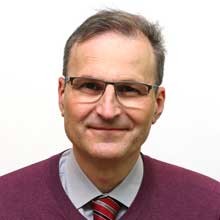
Principal Investigator

Researcher

Researcher

Post-doc
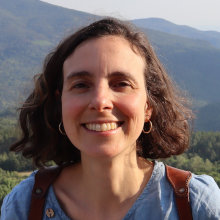
Post-doc
Former staff member, current collaborator
- Maddalena Lia, project manager (1/09/2025-present)
- Antonio Ferigo, former project manager (1/10/2024-31/08/2025)
Other participating researchers
External advisers
- Rosanna Sornicola
Academia Europaea - Paolo Greco
Università di Napoli Federico II - Maria Selig
- University of Regensburg
- Ádám Szabó
Hungarian National Museum - University of Public Service Budapest