
BRIDGE
Building Resilient Institutional Dialogue for Governance and Education
Project
The BRIDGE Project (Building Resilient Institutional Dialogue for Governance and Education) is a flagship advanced-training and capacity-building initiative designed to strengthen long-term cooperation between Italy and its partner countries in Central Asia. Building upon the increase in diplomatic relations within the Ministerial Conference in a “5+1” format and on the political momentum generated by the 2025 first Summit of head of State and Government, BRIDGE translates high-level diplomatic dialogue into structured, operational cooperation grounded in knowledge exchange, institutional capacity-building, and joint project development. BRIDGE represents an important step towards fostering durable ‘Knowledge Networks’ between Italy and Central Asia by bringing together academia, public institutions, international organizations, and the private sector with the aim of supporting intergovernmental dialogue through multi-stakeholder cooperation and knowledge-based partnerships.
BRIDGE – Building Resilient Institutional Dialogue for Governance and Education is an international higher education and capacity-building initiative coordinated by Ca' Foscari University of Venice. The project both builds upon and seeks to further strengthen the increasing political and institutional momentum experienced in recent years by the relations between Italy and the countries of Central Asia.
In line with the Astana Summit’s call for enhanced knowledge networks and coordinated responses to transnational challenges, BRIDGE consolidates earlier academic and institutional exchanges promoted by Ca’ Foscari through the KNIT-CA (Knowledge Network-building between Italy and Central Asia) project into a structured, scalable training programme. It establishes a network of Schools of Policy (SoP) that bring together public officials, technical experts, and selected private-sector actors from Central Asia and Italy. The project positions advanced training and higher education as strategic instruments to reinforce institutional dialogue, promote shared governance approaches, and foster sustainable development partnerships across priority sectors.
Consistently with intergovernmental agenda, BRIDGE addresses shared priorities such as water- health nexus, connectivity, sustainable agriculture, and energy transition, while strengthening the technical and managerial capacities required to design and implement effective policies. As such, the project is conceived to transform intergovernmental dialogue into concrete pathways for coopration,
BRIDGE adopts a multidisciplinary and strongly practice-oriented approach that combines theoretical knowledge, policy analysis tools, and applied learning methodologies. The programme seeks to enhance participants’ technical, managerial, and project-design capacities while fostering long-term professional networks and international partnerships capable of generating sustainable cooperation initiatives over time.
In particular, BRIDGE project aims to:
- strengthen technical, institutional, and managerial capacities of public officials and economic operators;
- foster a transnational community of policy professionals capable of engaging in multi-level and multi-actor governance;
- support bottom-up consolidation of intergovernmental dialogue through shared knowledge and best practices;
- promote the co-creation of context-sensitive, replicable policy tools and project proposals;
- expand and stabilize Italy-Central Asia Knowledge Networks involving academia, public institutions, international organizations, and the private sector;
- use advanced training as a tool for trust-building, institutional interoperability, and shared ownership of development pathways.
The project is run by the Department of Asian and North African Studies, Ca' Foscari University of Venice, with the support of the Ministry of Foreign Affairs and International Cooperation.
Schools of policy
The BRIDGE training pathway provides an integrated framework that combines a clearly sequenced timeline, progressive learning, and a well-balanced distribution of responsibilities across partners. The programme is built around a three-phase modular structure, ensuring a progressive transition from shared analytical foundations (Module 1) to sectoral specialization (Module 2) to applied project development (Module 3).
- The first phase consists of a common online training module focused on building a shared analytical framework and providing participants with tools related to project cycle management and international project design.
- The second phase includes intensive specialized schools in Italy organized by partner universities, featuring advanced training activities, seminars, applied laboratories, simulations, and field visits. These schools focus on four strategic thematic areas: the water-health nexus, connectivity and infrastructure, sustainable agriculture, and energy transition.
- The third phase takes place in Central Asia and is dedicated to the exchange of best practices, territorial cooperation, and the joint development of concrete project proposals.

The common online training module
The Module constitutes the foundational component of the BRIDGE programme, addressed to all participants, regardless of their thematic specialization. It is designed to provide participants with a common conceptual, institutional, and methodological framework that will support and strengthen the subsequent specialized Schools of Policy.
The Module adopts a strongly interdisciplinary and cross-sectoral approach, encouraging participants to understand how different challenges intersect and how integrated governance approaches can improve the effectiveness and sustainability of public policies.
The teaching methodology reflects the interdisciplinary and practice-oriented nature of the BRIDGE Programme. Lectures will be delivered by academic experts, institutional practitioners, representatives of international organizations, and professionals from the private sector. This plurality of perspectives is intended to foster critical reflection, comparative analysis, and the exchange of experiences across different governance and policy contexts.
Ultimately, the Common Online Training Module serves as the shared intellectual and operational foundation of the entire BRIDGE Programme, equipping participants with the analytical tools, conceptual frameworks, and collaborative networks necessary to engage effectively in the specialized Schools of Policy and in future Central Asia-Italy cooperation initiatives. Through this common training pathway, participants become part of a broader community committed to resilient governance, sustainable development, and constructive international partnership.
The Common Online Training Module is organized by Ca’ Foscari Department of Asian and North African Studies in cooperation with Sogesid S.p.A. [ITA].

School of policy on sustainable agricolture. University of Bologna, 15-19 June 2026
The School of Policy on Sustainable Agriculture will take place at the Università di Bologna from 15 to 19 June and will bring together experts and academics to explore key issues related to technological innovation in agriculture and the ecological transition. The programme focuses on cutting-edge topics such as precision agriculture, water resource management, and climate adaptation strategies for tree crops. Through the contributions of faculty members from the Università di Bologna and the Università degli Studi della Tuscia, together with experts from the Emilia-Romagna Region, participants will examine the core themes of the School also through project-development laboratory activities.
The School of Policy approaches agriculture not as an isolated sector, but as a strategic policy field situated at the intersection of climate change, water governance, food security, and territorial development — all central priorities within the evolving partnership between Italy and the countries of Central Asia.
Within this framework, the School pursues the following main objectives:
- to strengthen participants’ understanding of the interconnections between agriculture, water resources, and climate change;
- to introduce governance approaches and policy tools for sustainable and climate-resilient agricultural systems;
- to present innovative technologies and practices for irrigation efficiency, soil management, and crop resilience;
- to facilitate the critical transfer of Italian experiences and best practices to the national and regional contexts of Central Asia;
- to promote professional networks and long-term cooperation among Italian and Central Asian institutions, experts, and practitioners.
The School of Policy on Sustainable Agricolture in organized by the Department of History and Cultures of University of Bologna in cooperation with the Department of Agricultural and Forestry Sciences of the University of Tuscia and Asia Institute.

School of policy on connectivity and infrastructures. Sapienza University of Rome, 22-26 June 2026
The School of Policy is dedicated to the theme “Connectivity & Infrastructure – Logistics, Transport and Digitalization” and explores the strategic role of transport infrastructure, multimodal corridors, and connectivity governance in the economic development and regional integration of Central Asia. In particular, the programme highlights the growing importance of the Middle Corridor as a strategic link between Asia and Europe and as a space for cooperation among institutions, economic operators, and technical stakeholders.
Through lectures, seminars, case studies, applied discussion sessions, and project-oriented activities, the School aims to strengthen the capacities of public officials, experts, and practitioners in the fields of infrastructure planning, logistics, project financing, sustainability, and the digital transformation of transport systems. The objective is to promote institutional capacity-building, the development of shared standards, and the creation of concrete project initiatives between Italy and Central Asia.
The School of Policy on Connectivity and Infrastructures is organized by the Interdepartmental Research Centre for Geopolitical Studies and Territorial Analysis – CISGAT of Sapienza University of Rome in cooperation with FS Engineering, the engineering company of the Ferrovie dello Stato Italiane Group.

School of policy on water-health nexus. Ca’ Foscari University of Venice, 6-10 July 2026
The School of Policy on Water, to be held in Venice from 6 to 10 July 2026, is conceived as an intensive high-level training and institutional cooperation programme devoted to drinking-water and wastewater management, with particular attention to the needs and perspectives of Central Asian countries. The School responds to the need to connect regional water challenges – resource scarcity, climate variability, agricultural and industrial pressures, historical pollution and the management of transboundary river basins – with the experience developed by the European Union and the World Health Organization in the fields of water safety, health protection and integrated water resources management.
The programme guides participants from an initial normative and conceptual framework – Directive (EU) 2020/2184, the Water Safety Plan approach, the UNECE/WHO-Europe Protocol on Water and Health, and Integrated Water Resources Management – towards operational topics such as chemical and emerging contaminants, microbiological risks, treatment processes, disinfection, materials in contact with drinking water, network efficiency, building water safety, Legionella, wastewater, sludge, reuse and Sanitation Safety Planning.
Through lectures, interactive discussions, group work, a project design workshop and technical visits to treatment plants, the School aims to translate regulatory and scientific knowledge into operational priorities, pilot actions and possible pathways for regional cooperation, culminating in the development of a concise “Venice Roadmap”.
The School of Policy on Water-Health Nexus is organized by Ca’ Foscari Department of Asian and North African Studies in cooperation with the Italian National Institute of Health (Istituto Superiore di Sanità – ISS) and Sogesid S.p.A. [ITA].

School of policy on renewable energy. University of Milano-Bicocca, 13-17 July 2026
The School of Policy on Renewable Energy, hosted by the University of Milano-Bicocca from 13 to 17 July 2026, is part of the BRIDGE Project, aimed at strengthening knowledge networks and cooperation between Italy and Central Asia. Organized by the University of Milano-Bicocca together with Ca’ Foscari University, the programme will bring together a delegation of around twenty officials and experts from Kazakhstan, Uzbekistan, Tajikistan, Turkmenistan and Kyrgyzstan. The School offers an intensive training and policy dialogue programme on energy policy, regulation and the transition towards low-carbon energy systems. Drawing on European and international experience, it will address key topics such as decarbonisation strategies, renewable energy technologies, electricity networks, smart grids, energy efficiency, security of supply, investment planning, green finance and analytical tools for decision-making. Particular attention will be given to the interaction between regulatory frameworks, technologies and the specific conditions of Central Asian countries, which combine abundant energy resources with emerging challenges related to diversification, network resilience and sustainability. Through lectures, discussions, group work and a technical visit, the School aims to foster mutual learning, institutional cooperation and the development of future joint initiatives in the field of renewable energy and green transition.
News
The Summer School on the Water–Health Nexus, part of the educational programme of the BRIDGE – Building Resilient Institutional Dialogue for Governance and Education project, officially began in Venice on 6 July 2026.
Running until 10 July, the Summer School brings together experts, institutional representatives, and participants from Italy and Central Asian countries to explore key issues related to the sustainable management of water resources, water security, and public health protection. The programme features lectures, seminars, and interdisciplinary discussions designed to foster knowledge exchange and collaboration.
The Summer School provides an important opportunity for advanced training and international cooperation, with the aim of strengthening participants' expertise, promoting dialogue between academia and institutions, and building collaborative networks to support more resilient and sustainable water governance.
The initiative is organised by the Department of Asian and North African Studies (DSAAM) at Ca' Foscari University of Venice, in collaboration with the Italian National Institute of Health (ISS), Sogesid S.p.A., the University of Bologna, Sapienza University of Rome, and the University of Milano-Bicocca, with the support of the Italian Ministry of Foreign Affairs and International Cooperation (MAECI).

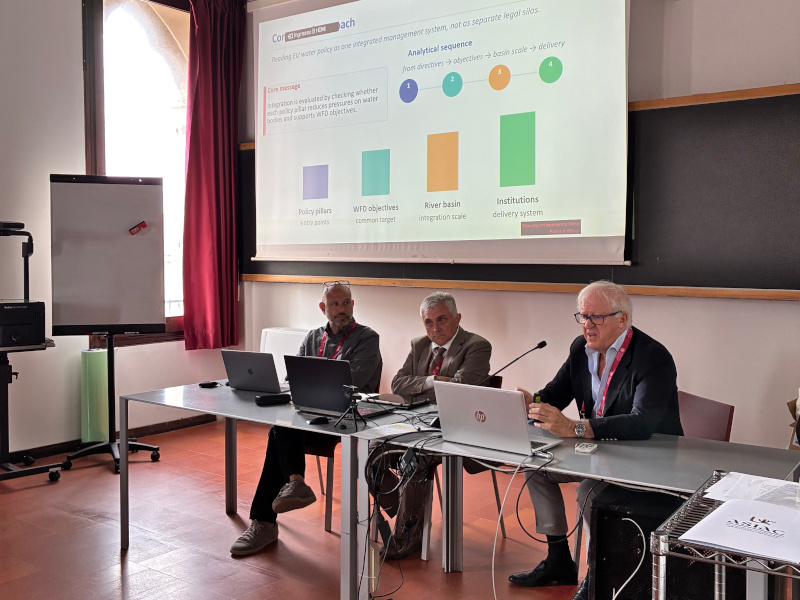
From 22 to 26 June 2026, Sapienza University of Rome hosted the School of Policy on Connectivity and Infrastructures, an intensive training programme dedicated to logistical, infrastructural, digital and territorial connectivity between Italy, Europe and Central Asia.
The School brought together participants from Kazakhstan, Kyrgyzstan, Tajikistan, Turkmenistan and Uzbekistan to examine the strategic transformations currently reshaping Eurasian connectivity. The programme was designed and implemented by the Interdepartmental Research Centre for Geopolitical Studies and Territorial Analysis – CISGAT of Sapienza University of Rome, in cooperation with FS Engineering.
Over five days, participants explored infrastructure corridors not only as transport routes, but as strategic spaces where logistics, technology, standards, investments, security and institutional partnerships interact. Particular attention was devoted to Central Asia’s position within the Eurasian space, its landlocked condition and the growing relevance of the Middle Corridor as a key framework for diversification, resilience and cooperation between Asia and Europe.
The School combined academic lectures, strategic discussions and applied sessions. Moreover, a technical visit to FS Engineering in Naples allowed participants to engage directly with infrastructure planning, system management and operational expertise.
The School offered a concrete example of cooperation between academia, institutions and industry, strengthening dialogue between Italy and Central Asia on connectivity, resilience, digital transformation and territorial development.
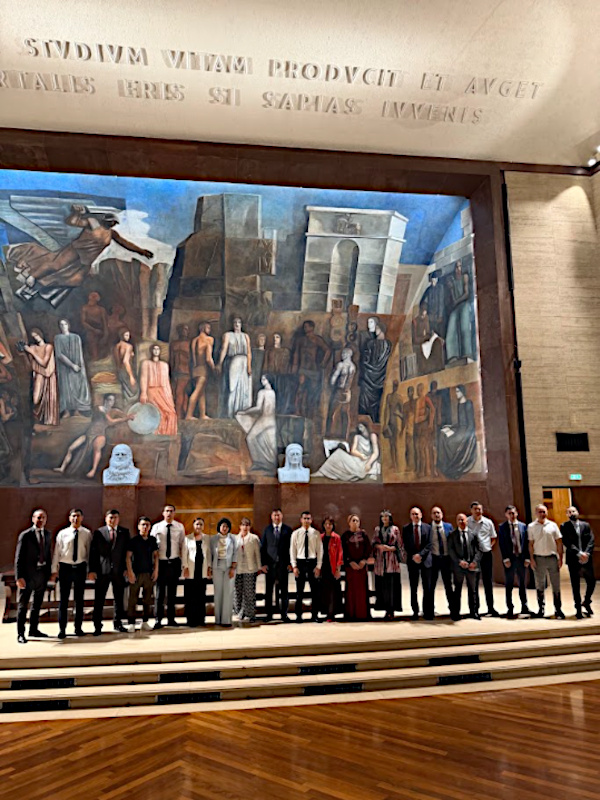
From 15 to 19 June 2026, the University of Bologna hosted the BRIDGE School of Policy on Sustainable Agriculture, a five-day advanced training initiative dedicated to sustainable agriculture, technological innovation and ecological transition.
The School brought together participants from the five Central Asian countries with the aim of strengthening dialogue and cooperation between Italy and Central Asia in a policy area of growing strategic relevance.
The Bologna School focused on some of the most pressing challenges facing the agricultural sector today: water resource management, precision agriculture, climate-change adaptation, soil degradation, rising temperatures and extreme weather events. Through lectures, expert-led discussions, case studies and field visits, participants explored how research, technology and policy can work together to support more resilient and sustainable agricultural systems.
A distinctive feature of the School was its combination of theoretical and practical approaches. Academic sessions provided participants with analytical tools and comparative perspectives, while practice-oriented activities were designed to identify concrete areas for cooperation and to launch pilot project ideas involving Italian and Central Asian institutions, experts and stakeholders. The pilot cooperation projects developed during the School will be further refined in the coming months and presented in autumn at a dedicated workshop planned to take place in Ashgabat, Turkmenistan. The workshop will offer an opportunity to discuss the proposals with institutional and technical partners and to consolidate the next steps of BRIDGE cooperation in the field of sustainable agriculture.
The School of Policy on Sustainable Agriculture was co-organised by the Department of History and Cultures and the Asia Institute of the University of Bologna, in cooperation with the University of Tuscia, the Emilia-Romagna Region [ITA] and the Canale Emiliano Romagnolo [ITA].
Sustainable Agriculture between Italy and Central Asia [ITA]
On 22 May, the BRIDGE project was presented in Rome during the VI edition of “Equilibrium”, a Festival of Geopolitics and International Relations promoted by the University of International Studies of Rome (UNINT) and Geopolitica.info, with the support of the Italian Ministry of Foreign Affairs and International Cooperation.
The Festival featured five meetings devoted to major contemporary geopolitical scenarios, including Central Asia and the Caucasus. BRIDGE was presented during the session dedicated to these two regions, which addressed the political and geopolitical dynamics affecting them in the context of the ongoing transformation of the international system.
Within this framework, BRIDGE was introduced as a tool of strategic cooperation aimed at strengthening the partnerships needed to address shared challenges in a coordinated manner. By promoting advanced training, institutional dialogue, and cooperation among public authorities, universities, and economic actors, the project supports common responses to increasingly interconnected geopolitical, economic, and development challenges, while contributing to long-term relations between Italy and Central Asia.
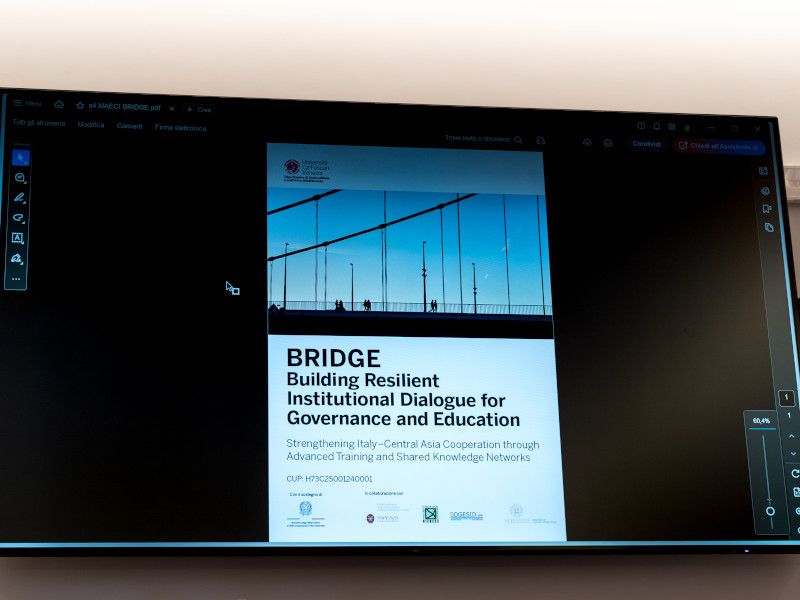
On 18 May, the BRIDGE Common Online Training Module officially began, marking the start of educational and capacity-building activities within the framework of the BRIDGE project. Bringing together participants from Italy and Central Asia, the programme is designed to promote knowledge exchange, foster institutional dialogue, and strengthen cooperation through advanced training and shared learning experiences. Over the course of the programme, participants will engage with a wide range of topics related to international cooperation, governance, sustainable development, and regional connectivity. Lectures and discussions will be led by experts from universities, public institutions, international organizations, and the private sector, providing an interdisciplinary perspective on the challenges and opportunities shaping relations between Italy and Central Asia. The Common Online Training Module represents a key component of the BRIDGE project’s broader mission to support resilient partnerships and long-term cooperation between the two regions. By encouraging interaction among students, academics, policymakers, and practitioners, the initiative contributes to the development of durable networks and shared expertise, reinforcing the foundations for future collaboration in education, governance, and sustainable development.
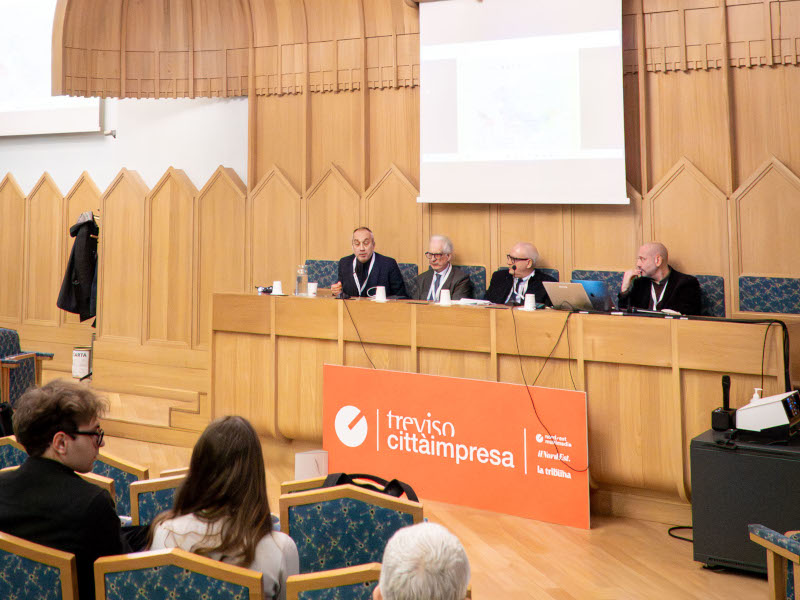
On 27 March, the BRIDGE project was presented in Treviso within Cittàimpresa, a three-day forum devoted to industrial districts, and territorial development, during the panel “Italy and Central Asia: Building Shared Responses to Geopolitical and Development Challenges" [ITA].
The discussion highlighted BRIDGE as an instrument to support the strengthening of the strategic partnership between Italy and Central Asia. In a context marked by increasingly interdependent geopolitical, economic, and developmental challenges, the project aims to promote coordinated responses based on expertise, institutional dialogue, and cooperation between the public sector and the business community.
Particular attention was devoted to the impact of these shared challenges on growth, competitiveness, and the resilience of productive systems in both Italy and Central Asia. Through advanced training, policy-oriented knowledge exchange, and the creation of durable networks among universities, public institutions, and economic actors, BRIDGE seeks to translate strategic dialogue into concrete cooperation initiatives.
The presentation at Cittàimpresa offered an opportunity to situate the project within the broader debate on the international projection of Italian industrial territories and on the role of knowledge networks in supporting long-term Italy-Central Asia cooperation.
On 17 December, Ca’ Foscari University of Venice hosted the launch event of the BRIDGE project. The event, entitled “Building Knowledge Networks between Italy and Central Asia. Bottom-up Contributions to the ‘1+5’ Cooperation Framework”, was held in the framework of the XIX Annual Conference of the Association for the Study of Central Asia and the Caucasus in Italy, which brought to Venice more than 150 scholars from across the world.
The launch event saw the participation of Minister Plenipotentiary Federico Failla, Coordinator for Central Asia at the Italian Ministry of Foreign Affairs and International Cooperation, together with representatives of Ca’ Foscari University and of the partner institutions involved in the project.
The event offered an opportunity to present the project’s objectives, partnership structure, and forthcoming activities. It also provided a platform for discussion on the role of higher education, advanced training, and knowledge networks in supporting resilient institutional dialogue and long-term cooperation between Italy and the countries of the region.
Team

Project director

Scientific coordinator

Programme coordinator